

Key Takeaways
Why Coverage Gaps Are So Common
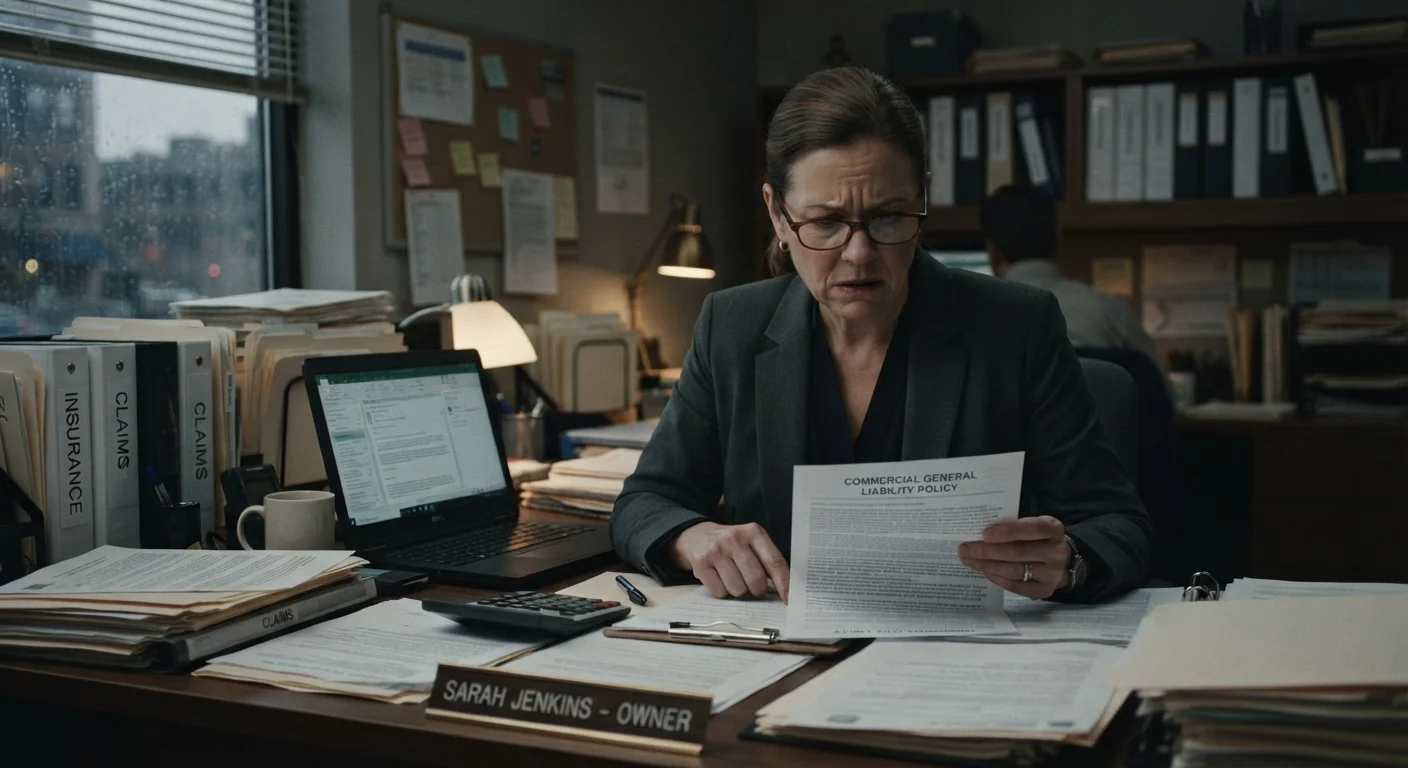
Insurance policies are legal contracts governed by precise language. What a business owner believes is covered and what the policy actually covers are frequently two different things. This disconnect - between assumed protection and actual protection - is the root cause of most coverage gap problems.
Gaps arise from multiple sources: exclusions written into standard policy forms, limits set too low for realistic loss scenarios, and coverage that was adequate at purchase but became outdated as the business grew. Common insurance misconceptions compound the problem, as widely shared but inaccurate beliefs about policy scope circulate among business communities.
The consequence is typically discovered at the worst possible moment - when a claim is filed and partially or entirely denied. At that point, the business absorbs costs it believed were transferred to an insurer.
Coverage Assumptions Can Be Costly
Many business owners rely on a general understanding of what their policy covers rather than the actual policy language. Exclusions are legally binding regardless of what a business owner believed was included. Before a loss occurs, review your full policy document - not just the summary declarations page - with a licensed insurance adviser.
The Most Consequential Mistakes Business Owners Make
The errors below are not unusual - they reflect patterns seen across industries and business sizes. Understanding why they happen is the first step toward correcting them before a loss occurs.
Assuming a Business Owner's Policy (BOP) covers all business risks.
Why it happens: BOPs are marketed as comprehensive packages, which leads many owners to believe one policy handles everything. In reality, BOPs bundle only general liability and commercial property, leaving significant categories - such as professional liability, cyber liability, and commercial auto - entirely unaddressed.
Overlooking cyber liability exposure because the business seems too small to be targeted.
Why it happens: Small and mid-sized businesses often believe cybercriminals focus exclusively on large corporations. In practice, smaller businesses with limited security infrastructure are frequently targeted precisely because they are easier to breach.
Choosing policy limits based on premium cost rather than realistic loss scenarios.
Why it happens: When budgets are tight, business owners often select the lowest available limits to reduce premiums. This decision is made without modeling what a serious liability judgment, extended business interruption, or large property loss would actually cost.
Failing to carry professional liability coverage for service-based work.
Why it happens: General liability insurance covers bodily injury and property damage, which feels sufficient to many service providers. However, general liability does not cover financial losses a client suffers due to advice, errors, or omissions in professional services.
Not updating coverage after significant operational changes.
Why it happens: Renewing the same policy year after year feels efficient, and many owners assume that minor growth is automatically covered. Insurance policies are underwritten based on a specific risk profile, and that profile becomes outdated as businesses evolve.
Business Growth Creates New Exposure
Expanding services, hiring employees, or operating in new locations can instantly create coverage gaps if your insurer is not informed. Most policies are underwritten based on the business profile at issuance. Failing to update your insurer about material changes may give them grounds to reduce or deny a claim. Notify your agent whenever your operations change significantly.
Businesses that operate across multiple sectors face an additional layer of complexity. Evaluating insurance needs for multi-sector operations addresses how standard single-industry policies often fail when business models span categories. Similarly, businesses using independent contractors or gig workers should review insurance considerations specific to the gig economy, where worker classification directly affects coverage.
Taking a Structured Approach to Gap Identification
Identifying gaps before a claim requires deliberate review rather than passive reliance on renewal notices. A structured approach begins with documenting all business activities - including any that have changed since the last policy review - and mapping each activity to its primary risk category.
75%
Businesses estimated to be underinsured
Industry analyses from insurance research groups have consistently found that a substantial majority of small and mid-sized businesses carry insufficient coverage relative to their actual asset values and liability exposure.
43%
Share of cyberattacks targeting small businesses
According to Verizon's Data Breach Investigations Report, small businesses represent a disproportionately large share of recorded cyber incidents, contradicting the assumption that only large enterprises are at risk.
From there, cross-reference each risk category against your current policies. Note any category without explicit coverage, any limit that appears low relative to realistic loss estimates, and any exclusion that applies to a core business activity. A structured coverage assessment can provide a practical framework for this process.
Policy review is general financial and insurance information - it is not a substitute for advice from a licensed insurance professional who understands your specific business, jurisdiction, and industry. Engage a qualified agent or broker to validate your findings and identify exclusions that may not be immediately apparent from a summary reading of your policy.
This article is for general informational and educational purposes only and does not constitute insurance, legal, or financial advice. Coverage terms, exclusions, limits, and eligibility vary by insurer, policy, and jurisdiction. Consult a licensed insurance professional and review your actual policy documents before making coverage decisions.