

Key Takeaways
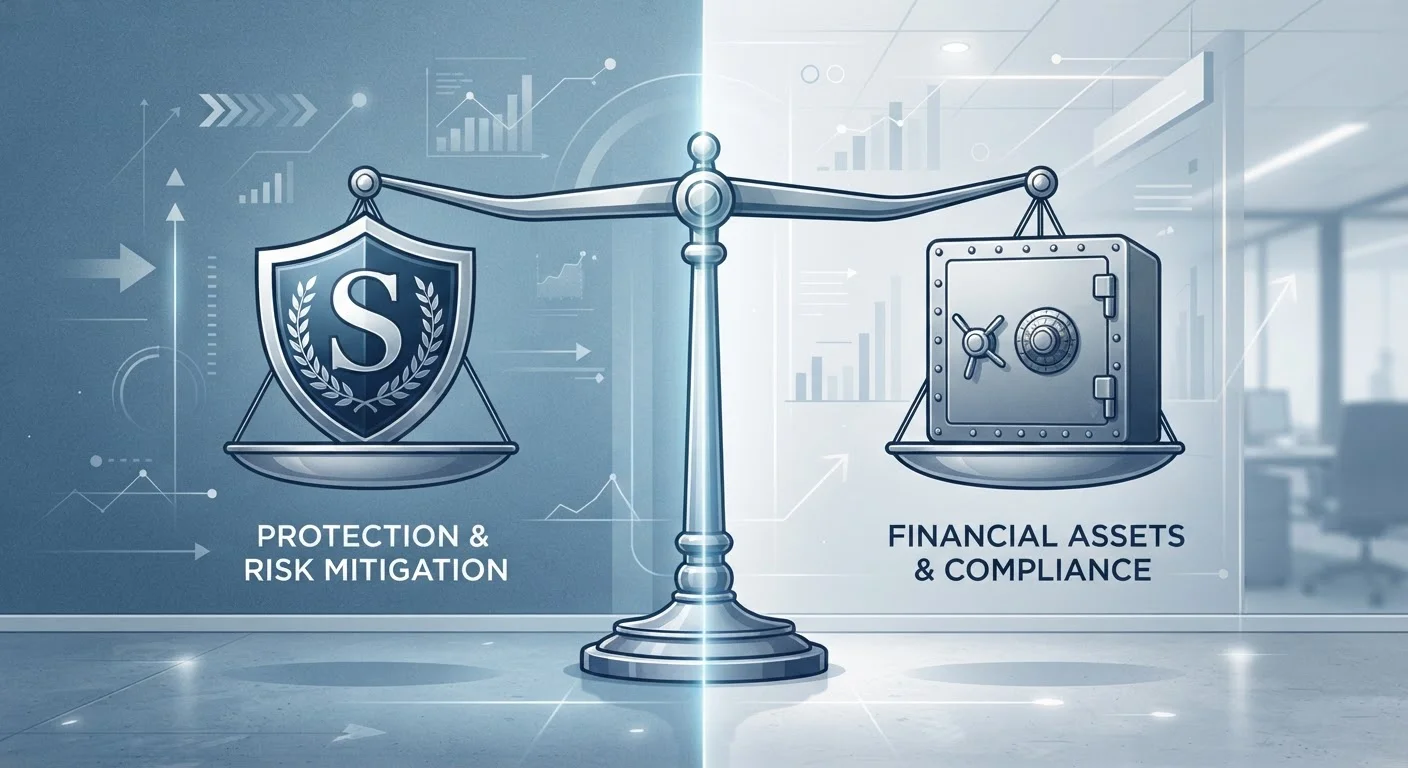
Option A
Risk Transfer
The contractual approach to shifting financial exposure to a third party.
Best for: Businesses facing high-severity, low-frequency risks that would be financially devastating without external coverage.
Option B
Risk Retention
The deliberate decision to absorb and fund potential losses internally.
Best for: Businesses with strong cash reserves and predictable, low-severity exposures where insurance premiums exceed expected losses.
If your business faces catastrophic or hard-to-predict liability exposures
Risk Transfer
High-severity events - such as major property losses or third-party lawsuits - can exceed most businesses' financial reserves. Transferring these risks through insurance provides a contractual ceiling on potential loss.
If your business has strong liquidity and faces frequent, low-cost losses
Risk Retention
When losses are predictable and modest, retaining risk can be more cost-efficient than paying ongoing premiums that cumulatively exceed projected claim costs.
If you operate in a regulated industry with mandatory coverage requirements
Risk Transfer
Many industries require minimum insurance coverage by law or contract. In these contexts, transfer is not optional - it is a compliance obligation.
If you are exploring hybrid structures like captives or large deductibles
Risk Retention
Structured retention arrangements can give larger businesses more control over claims and cash flow while still maintaining some external coverage for catastrophic events.
What Each Strategy Actually Means
Risk transfer is the process of shifting the financial consequences of a potential loss to another party - typically an insurer - in exchange for a premium. When a business purchases a general liability policy, it is not eliminating risk; it is reassigning the financial burden of covered losses to the insurer under agreed terms and conditions.
Risk retention, by contrast, is the deliberate acceptance of financial exposure. This can be passive (simply not purchasing coverage) or active (setting aside dedicated reserves to fund potential losses). High-deductible plans, self-insurance programs, and captive insurance arrangements are all structured forms of retention. For more on captive structures, see self-insurance and captive trade-offs.
Neither approach is inherently superior. Both are legitimate risk financing tools that belong within a broader strategy - one that should be built into a scalable risk management framework from the outset.
Head-to-Head: Key Differences
The practical distinctions between the two strategies become clearest when examined across dimensions that matter to business decision-makers: cost structure, cash flow impact, administrative burden, and loss severity tolerance.
| Criterion | Risk Transfer | Risk Retention |
|---|---|---|
| Cost structure | Fixed premium paid to insurer | Variable; actual losses funded internally |
| Cash flow impact | Predictable outflow (premiums) | Unpredictable; spikes when losses occur |
| Best suited to | High-severity, low-frequency risks | Low-severity, high-frequency or predictable risks |
| Capital requirement | No large reserves needed | Requires accessible financial reserves |
| Administrative burden | Insurer manages claims process | Business manages claims internally |
| Regulatory compliance | Satisfies most mandatory coverage laws | May not meet legal minimums alone |
| Loss ceiling | Capped at policy limits (per terms) | Uncapped; full exposure retained |
It is worth noting that coverage terms, exclusions, and deductible options vary significantly by insurer and policy type. Always review actual policy documents with a licensed agent before drawing conclusions about what a transfer arrangement covers.
When Risk Transfer Makes Strategic Sense
Transfer is generally the more appropriate tool when the potential severity of a loss is high relative to available reserves, when losses are irregular and difficult to forecast, or when a contract or regulation mandates third-party coverage. A construction firm, for example, operates in an environment where a single liability event - a site injury or structural failure - could generate claims far exceeding annual revenue. Transferring that exposure through commercial general liability and workers' compensation insurance is not just prudent; it is often legally required.
40%
Small businesses without adequate liability coverage
Industry research consistently indicates that a large share of small US businesses carry insufficient liability limits relative to their actual exposure - leaving them functionally self-insured for losses above policy caps.
3-5%
Typical premium as a share of insured value
Commercial insurance premiums vary widely by industry and risk class, but for many property and liability lines, annual premiums represent a small fraction of the potential loss exposure being transferred.
Transfer also provides certainty. Businesses can budget for premium costs with greater precision than they can for unpredictable loss events. This predictability has real value in financial planning, particularly for smaller businesses with limited capital buffers. See how coverage decisions fit into long-term business financial planning for broader context.
When Retention Becomes the More Efficient Choice
Retention is not a corner-cutting measure - it is a deliberate financial decision appropriate in specific circumstances. When a business experiences a high volume of small, predictable losses (minor equipment damage, routine slip-and-fall claims at a large retail operation), the cumulative cost of insuring those events often exceeds the losses themselves once administrative fees and premium markups are factored in.
Larger businesses frequently use retention structures - such as large deductibles or self-insured retentions - to keep control of claims management and preserve cash flow. For most small businesses, however, meaningful retention requires a level of capitalization that simply isn't available. Before opting for retention, businesses should model potential loss scenarios honestly and ensure reserves are genuinely accessible - not theoretical.
Retention Requires Genuine Financial Readiness
Choosing to retain a risk is only a sound strategy when the business has liquid, accessible funds to cover projected losses - not just theoretical equity or tied-up assets. A business that retains risk without adequate reserves is effectively accepting unplanned exposure. Before formalizing any retention arrangement, work with a financial adviser or risk consultant to stress-test your loss scenarios against actual available capital.
Understanding your actual exposure profile is the first step. Assessing which coverage types your business needs can help establish a baseline before deciding how much to retain versus transfer.
Building a Blended Approach
In practice, most businesses use both strategies simultaneously. A typical structure might involve transferring catastrophic and legally mandated exposures through commercial insurance while retaining routine, low-severity risks through higher deductibles or unfunded reserves. The balance shifts as a business grows, enters new markets, or takes on contractual obligations that require specific coverage levels.
Businesses operating across multiple sectors face additional complexity - layered exposures that a single standard policy may not address cleanly. That context is explored in detail in evaluating insurance needs for multi-sector businesses. Exploring the full range of business insurance coverage types can also surface gaps that neither transfer nor retention has yet addressed.
This article provides general educational information about risk management concepts and is not a substitute for personalised insurance, legal, or financial advice. Coverage terms, premiums, and regulatory requirements vary by provider, policy, and jurisdiction. Consult a licensed insurance professional before making decisions about your business's risk financing strategy.