

Key Takeaways
Why Retention Economics Matter for Independent Restaurants
For independent restaurants operating on thin margins, the financial case for retention is straightforward. Repeat customers tend to spend more per visit, require less staff time to serve efficiently, and are more likely to recommend your venue without prompting. Acquiring a new diner - through advertising, promotions, or third-party platforms - carries a meaningful cost that erodes margin on the first visit.
Understanding where a diner sits in their relationship with your restaurant is the first step. A guest who has visited twice is not yet a regular - they are a promising candidate. Your goal is to make the third, fourth, and fifth visits feel increasingly natural and rewarding. This is the foundation of any retention strategy, and it sits within the broader concept of mapping the full guest journey.
5×
Cost to acquire vs. retain a customer
Research across service industries consistently shows that attracting a new customer costs approximately five times more than retaining an existing one.
67%
More spending by repeat vs. new customers
According to Bain & Company research on customer loyalty, repeat customers tend to spend significantly more per transaction than first-time buyers across retail and service categories.
Collect the Right Guest Data - Without Friction
Personalisation requires information, and information requires a collection habit. The goal is not to build an exhaustive profile - it is to capture enough context to make a returning guest feel recognised. At minimum, aim to record a guest's name, contact detail, visit date, and any notable preferences noted by staff.
Practical collection points include online reservation forms, takeout order accounts, and Wi-Fi sign-in pages. Front-of-house teams can be briefed to note dietary preferences or special occasions in a shared system. Even modest data - consistently maintained - supports meaningful outreach. For operators ready to invest in structured communication, building effective hospitality email campaigns offers a practical framework for turning contact lists into repeat visits.
Start With Data Before Technology
Resist the urge to buy a loyalty platform before you have a data collection habit in place. A simple spreadsheet or a notes field in your reservation system is enough to begin. Knowing a guest's name, usual order, and last visit date is more valuable than a points balance in a system nobody checks.
Loyalty Tactics That Work Without a Big Budget
Structured loyalty programmes are valuable, but they are not the only - or always the best - starting point for independents. Consider these proven approaches:
Recognise returning guests by name at every touchpoint
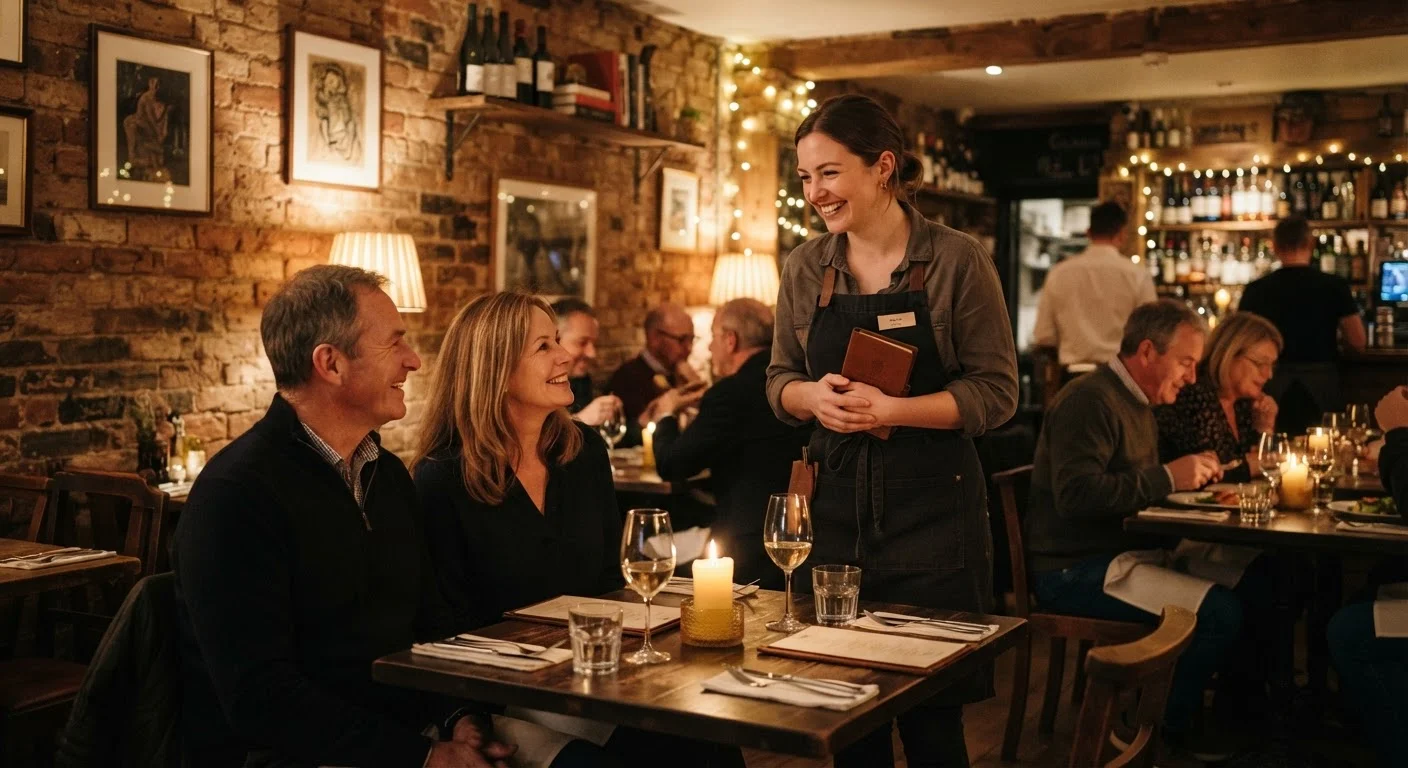
Personal recognition signals that a guest is valued as an individual, not just a transaction. It builds emotional connection and significantly increases the likelihood of return visits - without any direct cost.
Implement a simple visit-based reward - not necessarily points
A clear, predictable reward for visit frequency gives diners a concrete reason to return. Points systems add complexity; a straightforward 'every fifth visit earns a complimentary course' is easier to communicate and track.
Send a personalised follow-up within 24-48 hours of a first visit
The window immediately after a first visit is the highest-leverage moment for converting a one-time diner into a returning guest. A timely, specific message - referencing something from the visit - reinforces a positive experience before it fades.
Create a reason to return that is time-bounded but not pressured
A soft invitation - a seasonal menu change, a new tasting evening, or a returning ingredient - gives diners a natural occasion to revisit without relying on discounting or urgency tactics that can erode perceived value.
Capture and act on feedback between visits
Guests who share a concern and see it addressed become more loyal, not less. Proactively requesting feedback - and following up when something went wrong - demonstrates accountability and turns a potential churned customer into an advocate.
If you are evaluating a more formal programme, the pre-launch planning checklist covers the readiness questions operators should answer before committing to technology or reward structures.
Loyalty Programmes Are Not One-Size-Fits-All
The tactics below are general educational guidance for independent restaurant operators. The right approach for your business depends on your concept, customer base, margins, and operational capacity. Before committing to a programme or technology investment, consult with a business adviser or hospitality consultant familiar with your market.
Making It Stick: Staff, Follow-Up, and Consistency
The most effective loyalty tactics fail when execution is inconsistent. A guest who was greeted by name on visit two but ignored on visit three notices the gap. Training and briefing practices matter as much as any formal programme - for parallel thinking on how service consistency is built into staffing, see the approach to onboarding frontline staff for consistent service.
Post-visit follow-up - a brief thank-you message, a birthday acknowledgement, or a note referencing a previous visit - reinforces the relationship between visits. These touchpoints do not need to be elaborate; they need to be timely and genuine. Operators looking to scale their retention approach can find a broader strategic framework in growth marketing across the full hospitality funnel.
This article provides general educational information for independent restaurant operators and does not constitute personalised business, financial, or legal advice. Consult a qualified business adviser before making material operational or investment decisions.