

Key Takeaways
Property Management System (PMS)
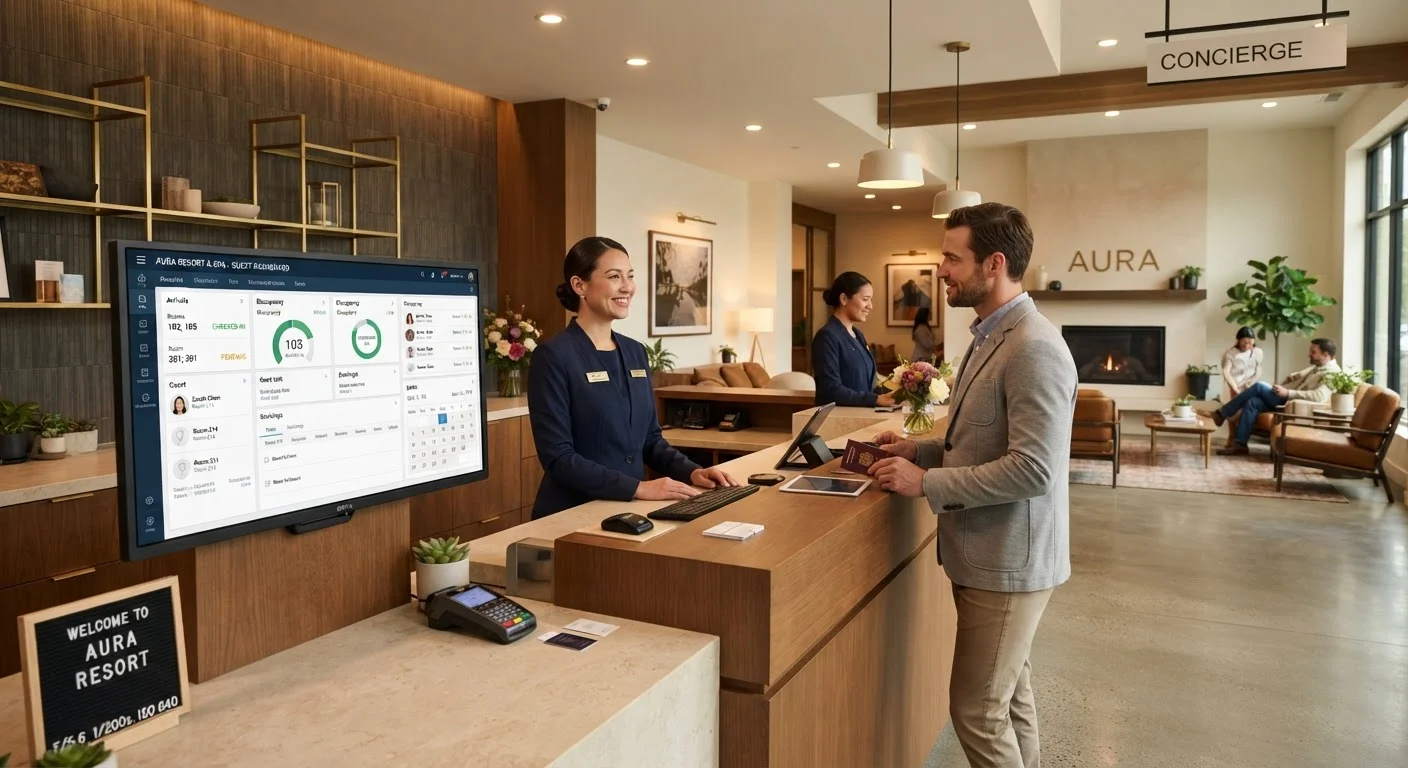
A property management system (PMS) is the central software platform hotels use to manage reservations, guest check-in and check-out, room assignments, housekeeping status, billing, and reporting. It acts as the operational hub connecting nearly every department in a hotel. Think of it as the single source of truth for what is happening across the property at any given moment.
Modern PMS platforms are typically cloud-based and use open APIs to integrate with channel managers, revenue management systems, point-of-sale terminals, and other third-party tools.
The Core Functions a PMS Handles
At its foundation, a property management system handles the transactional and operational data that a hotel generates every day. The most essential functions include:
- Reservations management: Creating, modifying, and cancelling bookings from all sources - direct, OTA, phone, and group.
- Front desk operations: Guest check-in, check-out, room assignment, and key issuance.
- Room and housekeeping status: Tracking which rooms are occupied, vacant, clean, or under maintenance in real time.
- Folio and billing: Posting charges, managing room rates, processing payments, and generating guest invoices.
- Reporting: Daily occupancy reports, arrival and departure lists, revenue summaries, and audit logs.
These functions replace what was once managed through paper registers and manual ledgers. The efficiency gain is significant - a front desk agent can see a guest's entire profile, booking history, and outstanding balance on one screen. This is part of how modern hotel operations are structured from the ground up.
Cloud-Based vs. On-Premise PMS
Historically, PMS platforms were installed on local servers at the property. Most modern systems are now cloud-based, meaning data is stored and accessed remotely. Cloud systems offer easier updates, remote access for managers, and lower upfront hardware costs, but they do require reliable internet connectivity. Properties in areas with unstable connectivity sometimes maintain hybrid setups as a contingency.
How a PMS Integrates with Other Hotel Systems
A PMS rarely operates in isolation. Its real value is amplified when it connects to the broader technology stack a hotel uses. Common integrations include:
- Channel manager: Syncs room availability and rates across direct booking engines, OTAs, and GDS platforms. When a room is booked on one channel, inventory updates automatically everywhere.
- Revenue management system (RMS): Pulls occupancy and booking pace data from the PMS to inform dynamic pricing decisions. Hotels pursuing dynamic pricing and occupancy strategy depend on this integration.
- Point-of-sale (POS) systems: Charges from the restaurant, spa, or bar are posted directly to a guest's room folio through PMS integration.
- Accounting software: End-of-day revenue reports flow into the hotel's financial system, reducing manual data entry.
This connected environment means that data entered once - say, a reservation - cascades automatically through billing, housekeeping scheduling, and reporting without being re-keyed. The quality of that integration directly affects staff efficiency and data accuracy.
90%+
Hotels using some form of PMS software
Industry estimates consistently indicate that the vast majority of full-service hotels globally operate with a property management system as their central operational platform.
30-50%
Reduction in manual check-in time with PMS automation
Hospitality technology studies have found that integrated PMS workflows can substantially reduce time spent on routine front-desk transactions compared to manual processes.
How Staff Use a PMS Day to Day
Different departments interact with the PMS in distinct ways, which is why staff training is critical during any implementation.
Front desk teams use the PMS for nearly every guest interaction - checking guests in, assigning accessible rooms, applying late check-out fees, and managing group blocks. The system also flags VIP profiles or special requests attached to a reservation.
Housekeeping supervisors rely on the room status dashboard to prioritise cleaning assignments and mark rooms as ready for new arrivals. In properties with mobile integrations, housekeepers update room status directly from their phones, which updates the front desk view in real time. This operational loop ties directly into how hotels organise shift structures and scheduling across departments.
General managers and finance teams use PMS reporting to track daily revenue, monitor occupancy trends, and prepare for ownership reviews. Many of the KPIs hotel operations managers track - including ADR and occupancy rate - are generated directly from PMS data.
Audit PMS Data Accuracy Regularly
The reports a PMS generates are only as reliable as the data entered into it. Build a routine - weekly or monthly - to audit reservation records, rate codes, and folio postings for errors. Inaccurate PMS data can distort occupancy reports, revenue figures, and the KPIs used to make pricing and staffing decisions. Assigning a specific team member ownership of data quality checks is a practical way to maintain system integrity.
PMS Data and Hotel Financial Performance
The reporting layer of a PMS is where operational data becomes financial intelligence. Nightly audit reports, which reconcile all revenue and charges for the day, form the basis of accounting entries. Occupancy and rate data from the PMS feeds directly into calculations like RevPAR, which is one of the primary benchmarks hotel owners and investors use to assess performance. Understanding what RevPAR actually tells you about hotel performance starts with understanding where that data originates.
For hotels evaluating new PMS platforms or considering technology upgrades, the financial implications - licensing costs, implementation fees, staff training - are meaningful. Owners exploring hospitality financing options sometimes include technology infrastructure as part of a broader capital plan. Consulting with a financial adviser or accountant familiar with hospitality operations is advisable before committing to a major system change.
This article is for informational purposes only and does not constitute financial, legal, or technology advice. Hotel operators should consult qualified professionals before making significant operational or financial decisions.