

Key Takeaways
Why Operational Sustainability Requires a Systems Approach
The towel reuse card is not a sustainability strategy - it is a single data point. Meaningful operational sustainability in hotels requires addressing interconnected systems: energy infrastructure, procurement chains, waste processing, water use, and workforce behavior. Each area affects the others, and progress in one can be undermined by inaction in another.
Hotels are resource-intensive by design. A typical full-service property operates heating, cooling, laundry, food production, and guest services simultaneously, around the clock. That operational complexity is also where the most significant sustainability gains are available - provided management approaches them methodically rather than through one-off gestures.
This guide is structured for hotel operations managers and property owners who already understand basic operations and want to move beyond surface-level initiatives. For a broader operational foundation, see the complete hotel operations overview.
Start With a Baseline Audit
Before implementing any sustainability initiative, establish a documented baseline for energy consumption, water use, and waste output. Without baseline data, it is impossible to measure whether interventions are working or to prioritize where effort will have the most impact.
The steps below are sequenced to build on each other: measurement first, infrastructure second, procurement and people third, and reporting last. Skipping the baseline audit - Step 1 - makes it difficult to justify or evaluate every subsequent decision.
What you will need
Common Pitfalls and How to Avoid Them
Several patterns consistently undermine hotel sustainability efforts. The first is initiative fragmentation - launching guest-facing programs before fixing back-of-house inefficiencies. Laundry operations, kitchen equipment, and HVAC systems generate far more environmental impact per dollar than amenity programs visible to guests.
The second is the absence of accountability. When sustainability responsibilities are not assigned to specific roles or embedded in performance expectations, they default to nobody's job. This is particularly acute across shift handovers. Housekeeping protocol breakdowns follow the same root causes - sustainability practices erode for the same structural reasons.
Sustainability Claims Carry Legal Risk
Overstating environmental credentials - sometimes called greenwashing - can expose a hotel to regulatory scrutiny and reputational damage. Any public-facing sustainability claims should be supported by documented, measurable data. Consult legal counsel before making certification or carbon-neutrality claims in marketing materials.
The third pitfall is treating sustainability as a marketing exercise rather than an operational discipline. Properties that report environmental metrics internally, hold departments accountable to targets, and integrate sustainability into management routines outperform those that lead with public claims. Substantive operational improvement tends to generate credible marketing material as a byproduct - not the other way around.
Capital Projects Require Financial Due Diligence
Sustainability upgrades such as HVAC replacements or solar installations involve significant upfront capital. Review payback periods, available financing structures, and local incentive programs carefully before committing. This article provides general operational guidance - consult a qualified financial adviser for decisions specific to your property.
For properties exploring how sustainability investments fit into broader financial planning, the hospitality financing hub covers funding considerations relevant to capital-intensive upgrades.
Conduct a Baseline Audit Across Energy, Water, and Waste
Sustainability improvements cannot be managed without measurement. Pull 12 months of utility bills to establish per-occupied-room benchmarks for electricity, gas, and water. Walk each operational area - laundry, kitchen, plant room, guest floors - and identify where consumption is highest and where waste accumulates. Document findings by category before setting any targets.
Prioritize Energy Systems - HVAC, Lighting, and Controls
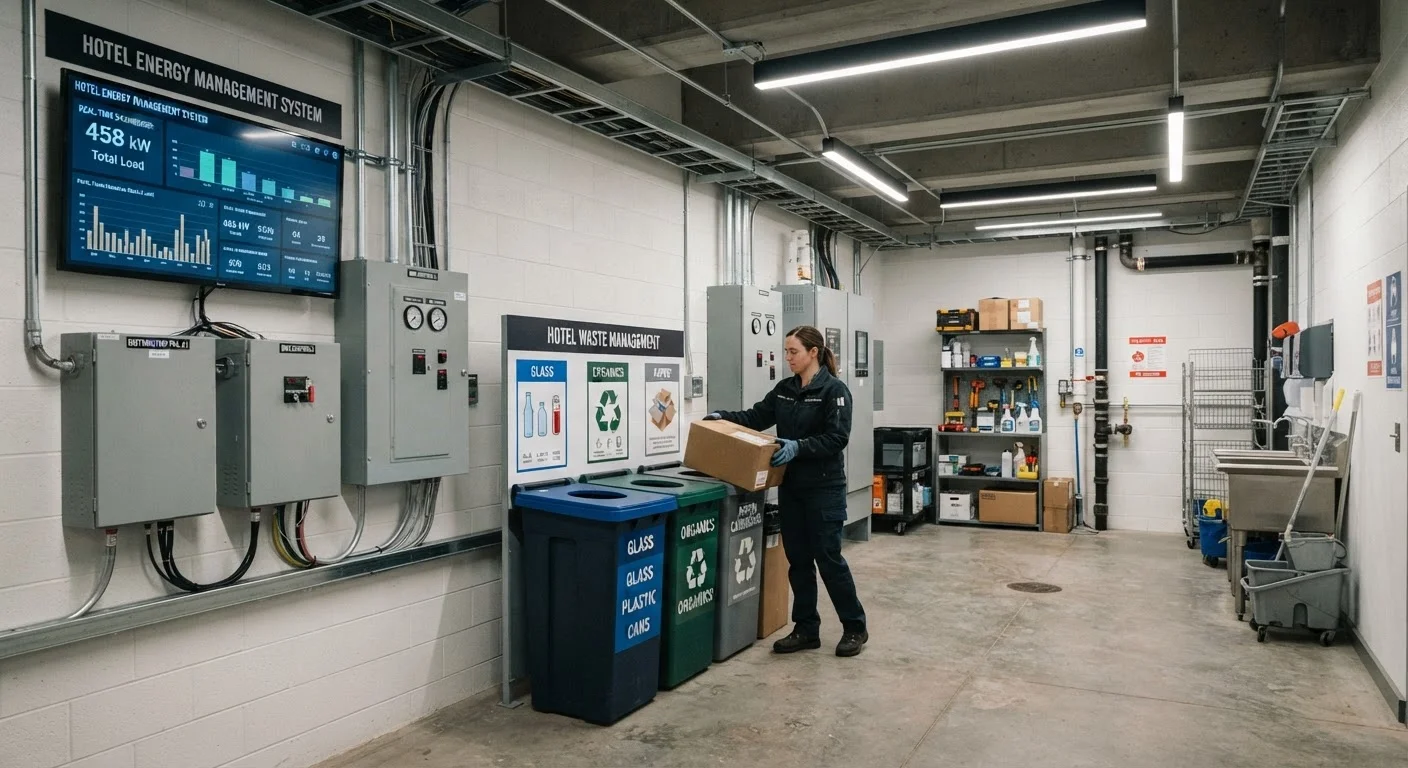
Energy typically represents the largest share of a hotel's operational carbon footprint. LED lighting retrofits in guest rooms, corridors, and back-of-house areas deliver measurable reductions with relatively modest upfront costs. For HVAC, investigate occupancy-linked thermostats or a full Building Energy Management System (BEMS) if the property scale justifies it. Keycard-linked room power cutoffs are a proven intervention in full-service hotels.
Redesign Waste Streams With a Reduction-First Mindset
Recycling is necessary but secondary to reduction. In food and beverage operations, menu engineering and tighter par-level management reduce food waste before it occurs. For housekeeping, transitioning away from single-use plastic amenities toward refillable dispensers eliminates a recurring waste stream entirely. Partner with your waste contractor to confirm what materials are actually being diverted versus landfilled - stated recyclability and actual recycling rates differ. See also the F&B operations considerations guide for margin and waste overlap in hotel restaurants.
Revise Procurement Standards for Linens, Supplies, and Food
Purchasing decisions made at the procurement stage determine sustainability outcomes downstream. For linen, evaluate thread counts and fiber content in relation to durability and wash cycles - longer-life linens reduce replacement frequency and total resource consumption over time. For food purchasing, regional sourcing can reduce transportation-related emissions while supporting local supply chains, though cost and consistency trade-offs vary by market. Establish minimum criteria for single-use item alternatives before vendor selection. The in-house laundry versus outsourced linen services analysis is relevant here when evaluating total linen lifecycle costs.
Embed Sustainability Responsibilities Into Staff Roles and Schedules
Policy documents do not change operations - trained people do. Integrate sustainability practices into departmental SOPs rather than treating them as a separate program. Housekeeping teams should understand the purpose behind linen reuse programs and be empowered to explain them to guests accurately. Maintenance staff should have clear protocols for reporting equipment inefficiencies. For scheduling context, see how hotels structure shifts and roles to understand where sustainability tasks fit into existing workflows.
Track Sustainability Metrics Alongside Standard Operational KPIs
Energy use per occupied room, water consumption per guest night, and landfill diversion rates are measurable operational metrics, not aspirational statements. Add them to regular management reporting cycles. If your property already tracks RevPAR, ADR, and staff-to-room ratios, environmental indicators belong in the same dashboard - not in a separate annual report. This integration signals organizational priority and enables faster course correction. The hotel KPI reference guide outlines how to structure performance measurement across departments.
This article provides general operational and educational information for hotel management professionals. It is not financial, legal, or professional advice. Consult qualified advisers before making significant capital, procurement, or compliance decisions for your specific property.