

Key Takeaways
Hotel Front Office
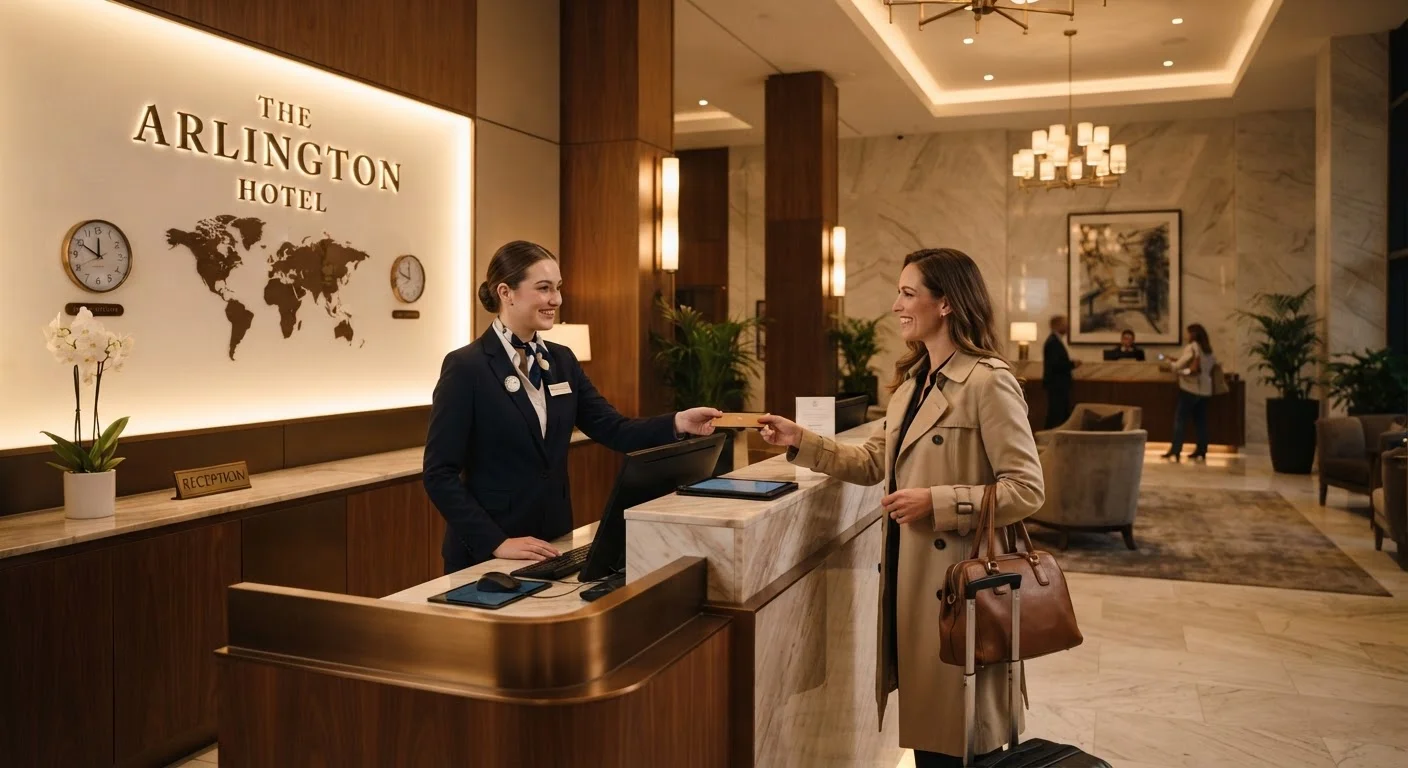
The front office is the department within a hotel responsible for managing guest arrivals, departures, reservations, and real-time communication between guests and the rest of the property. It typically encompasses the front desk, concierge, reservations team, and guest relations. As the first and last point of contact for most guests, it plays a defining role in shaping the overall experience.
In hotel accounting and reporting, front office performance is often measured through metrics such as average daily rate (ADR), occupancy rate, and revenue per available room (RevPAR), since front office teams directly influence room revenue and upsell opportunities.
What the Front Office Actually Does
In any hotel, the front office is far more than a check-in counter. It is the operational nerve centre - the point through which nearly every guest interaction flows, and the department most responsible for translating a property's brand promise into a lived experience.
Core responsibilities include managing reservations, assigning rooms, processing arrivals and departures, handling billing, and responding to in-stay requests. Beyond these transactions, front office staff field complaints, coordinate special arrangements, and relay information to housekeeping, maintenance, and food and beverage teams throughout every shift.
For hotel operators looking to understand how front office activity fits within the broader property structure, the complete hotel management overview provides useful context on how departments interlock.
Property Management Systems Are Central
Most front office functions today are managed through a property management system (PMS) - software that handles reservations, room assignments, guest profiles, billing, and reporting in a single platform. The specific PMS a hotel uses will shape workflows significantly. When evaluating operational improvements, consider whether existing system configurations support the processes you want to implement.
The Front Office as a Revenue Function
Front office operations are not purely a service function - they carry direct financial weight. Staff who understand rate tiers, room categories, and upsell opportunities can meaningfully improve a property's average daily rate (ADR) and revenue per available room (RevPAR).
Effective room assignment also matters. Placing guests in rooms that align with their stated preferences - and flagging upgrade opportunities when inventory allows - creates goodwill while improving yield. Cancellation handling, waitlist management, and walk-in rate decisions are all made at the front desk in real time.
~70%
Of guest complaints handled at the front desk
Industry estimates consistently indicate that the front desk is the primary escalation point for in-stay complaints, making staff training a high-leverage operational priority.
1st & last
Guest touchpoints owned by the front office
The front office manages both the arrival and departure experience - the two moments most strongly correlated with overall guest satisfaction in lodging research.
Night audit, which typically falls under front office management, is the critical process that reconciles daily charges and closes the accounting period. Errors at this stage can cascade into billing disputes and revenue recognition problems. Hotels should ensure front office managers understand both the service and financial dimensions of the role.
Staffing, Training, and Service Standards
The quality of a front office team is one of the most controllable variables in guest satisfaction. Staff who communicate clearly, handle pressure calmly, and resolve problems proactively drive measurable improvements in review scores and repeat visit rates.
Structuring the right team requires thoughtful scheduling. Front office roles typically span three shifts across a 24-hour cycle, with peak staffing aligned to check-in and check-out windows. The hotel staffing guide covers how to organise shift structures and manage labour costs effectively.
Onboarding matters enormously at the front desk, where new hires face high-stakes guest interactions from day one. The frontline onboarding guide outlines structured approaches for bringing new staff up to standard quickly while reducing early turnover.
Set Clear Service Recovery Protocols
Front office staff should have defined authority to resolve common guest complaints - such as room issues or billing errors - without escalating every situation to a manager. Empowering agents with clear resolution guidelines reduces response time and improves guest satisfaction. Document these protocols as part of standard onboarding to ensure consistency across shifts.
The Front Office Within the Broader Guest Journey
While the front office handles the most visible touchpoints - arrival, in-stay service, and departure - it operates within a wider guest experience ecosystem. Pre-arrival communication, reservation confirmation, and post-stay follow-up all connect to how the front office is perceived.
Hotels that map the full arc of guest interaction tend to make better staffing and process decisions. Understanding how the front office fits into the complete guest journey helps operators identify where improvements at the desk will have the greatest downstream impact on loyalty and online reputation.
Coordination with other departments also shapes the guest experience in ways that may not be immediately visible. When the front office communicates proactively with food and beverage teams, for example, guest preferences can be relayed before a guest even arrives at the restaurant. Understanding how F&B operations interact with hotel performance helps general managers see the front office not in isolation, but as part of an integrated service model.
This article is for informational and educational purposes only and does not constitute professional operational, financial, or legal advice. Hotel management decisions should be made in consultation with qualified industry professionals and advisers familiar with your specific property and market.