

Key Takeaways
Digital Broadcast Advertising
Digital broadcast advertising refers to paid ads delivered through internet-connected television services (Connected TV, or CTV) and streaming audio platforms. Unlike traditional broadcast, these channels use data-driven targeting to reach specific audience segments rather than broad demographic blocks. Ads appear within on-demand or live streaming content consumed on smart TVs, phones, tablets, and smart speakers.
CTV ad inventory is typically transacted programmatically through demand-side platforms (DSPs), with pricing structured as cost per thousand impressions (CPM). Streaming audio ads may be bought programmatically or through direct publisher agreements.
Why Digital Broadcast Is a Distinct Advertising Category
Streaming has fundamentally changed how audiences consume broadcast-style content. Viewers who have abandoned traditional cable - often called cord-cutters - and younger audiences who never subscribed in the first place are now primarily reachable through Connected TV platforms and streaming audio services. For businesses that historically relied on linear television or terrestrial radio, this represents a material shift in where target audiences actually spend their attention.
Digital broadcast advertising is worth treating as its own category because it combines the scale and format familiarity of traditional broadcast with the data-driven targeting more commonly associated with digital advertising. See the full advertising channel landscape for context on how these channels fit alongside search, social, and other formats.
87%
US households with at least one CTV device
According to Leichtman Research Group data cited in industry analyses, the vast majority of US households now have access to a connected television device.
~$30B
US CTV ad spend projected annually
Industry forecasts from research firms including eMarketer have projected US CTV advertising expenditure reaching this scale as streaming viewership displaces linear TV audiences.
2 in 3
US adults use ad-supported streaming audio monthly
Edison Research's Infinite Dial report has consistently shown that a majority of Americans access streaming audio services, with a significant share on ad-supported tiers.
Connected TV: How It Works and What It Offers
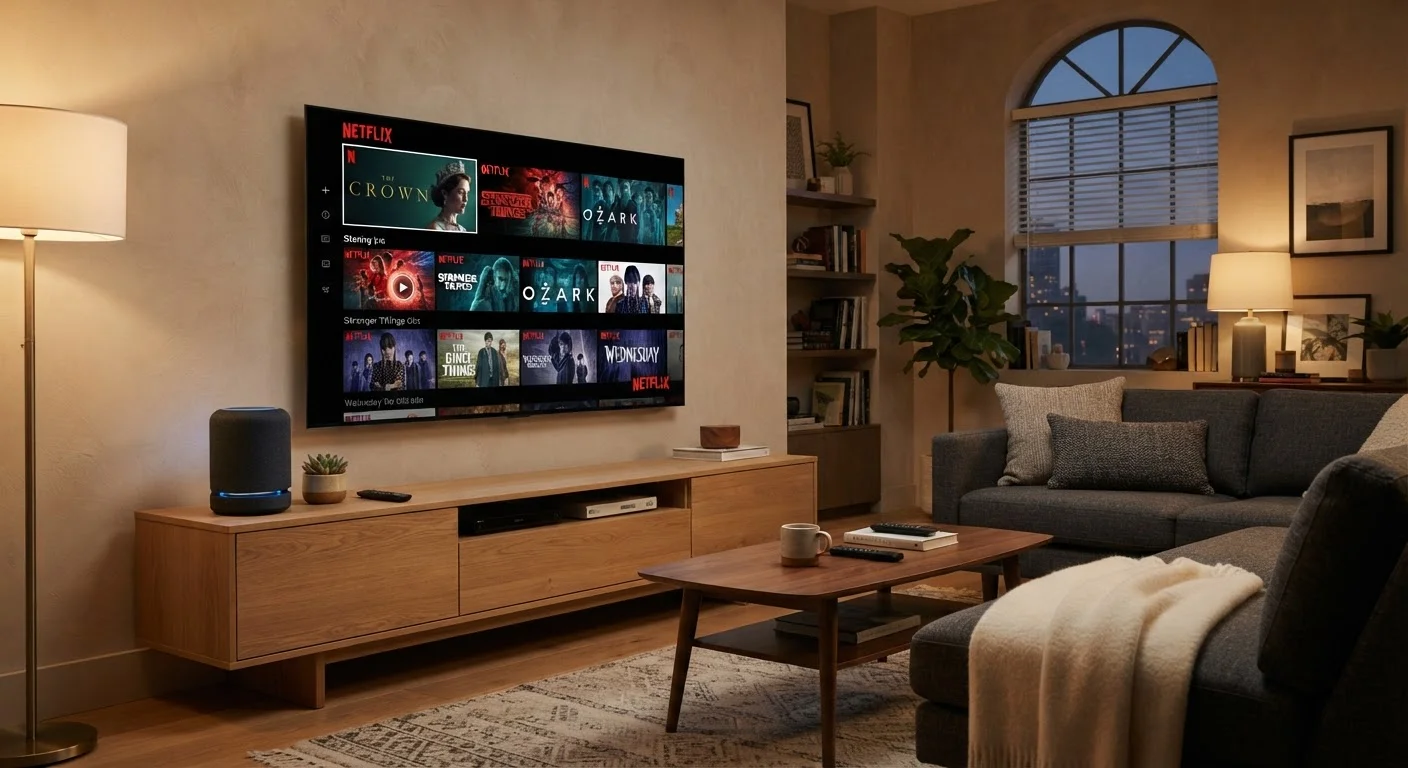
Connected TV advertising delivers video ads within streaming content viewed on a television screen - through smart TVs, streaming sticks, gaming consoles, or set-top boxes. The defining feature is that the content is delivered via an internet connection, which enables audience targeting that traditional TV cannot support.
Advertisers access CTV inventory through two primary routes: direct deals with streaming publishers, or programmatic buying through demand-side platforms. Programmatic access has made CTV increasingly available to mid-market advertisers who lack the budgets required for traditional network television.
Key format considerations include:
- Pre-roll and mid-roll video: Ads served before or during streaming content, often non-skippable, with completion rates typically higher than online video because viewers are in a lean-back viewing mode.
- Interactive overlays: Some platforms support interactive elements that prompt viewers to engage via a second screen, partially bridging the click-gap inherent to TV advertising.
- Audience targeting: CTV platforms can layer in behavioral, demographic, and household-level data, allowing advertisers to reach specific segments - such as in-market auto buyers or homeowners in a specific region - across multiple streaming environments.
Measurement remains a genuine limitation. Attribution is harder than in search or social because viewers cannot click through from a television screen. Lift studies and device-graph matching offer partial solutions, but businesses should plan CTV primarily as an upper-funnel awareness tool rather than a direct-response mechanism.
Match CTV Creative to the Viewing Environment
CTV viewers are typically in a relaxed, lean-back mode rather than an active browsing mindset. Creative that works well is visually clear at a distance, communicates the core message within the first five seconds, and includes a memorable brand cue - since viewers cannot click through. Repurposing social or display creative for CTV rarely performs as well as purpose-built television-style spots.
Streaming Audio: Reach Audiences in Screen-Free Moments
Streaming audio advertising covers ads delivered within digital music services, internet radio, and on-demand audio platforms. These environments capture attention during moments when visual media cannot - commutes, workouts, cooking, and other activities where a screen is impractical.
Audio ads in streaming environments are typically 15 or 30 seconds and are frequently non-skippable during ad-supported listening sessions. Because the listener cannot look away, completion rates tend to be high, though the format demands that the message works without visual support.
Streaming audio complements podcast advertising but operates differently. Podcast ads are often host-read and contextually integrated, while streaming audio ads are produced spots inserted programmatically into music or radio streams. The audiences and engagement dynamics are meaningfully distinct.
Targeting capabilities in streaming audio include geographic, demographic, and behavioral signals, as well as contextual targeting based on the genre or mood of content being streamed. Some platforms also support sequential messaging - delivering a series of ads to the same listener over time to build awareness incrementally.
Budget and Planning Considerations for Business Advertisers
Deciding whether CTV or streaming audio belongs in an advertising mix requires honest assessment of audience fit, budget, and measurement expectations. Neither channel is universally appropriate, and both carry trade-offs that differ from more performance-oriented channels like search or social. For a broader framework on avoiding budget dilution across channels, see building a multi-channel strategy.
A few planning principles worth applying:
- Align format to funnel stage: Both CTV and streaming audio are strongest for brand awareness and consideration. Businesses expecting immediate conversion volume from these channels are likely to be disappointed.
- Establish a realistic CPM baseline: CTV CPMs are generally higher than most digital channels, reflecting the premium inventory and non-skippable formats. Streaming audio CPMs tend to be lower, which can make it a more accessible entry point for testing audio's contribution to a media mix.
- Plan for cross-channel measurement: Because neither channel closes the loop easily on its own, businesses benefit from setting baseline metrics - brand search volume, website traffic from new visitors - that can signal lift without requiring last-click attribution.
- Creative requirements differ: CTV demands professionally produced video. Streaming audio requires a script that communicates the offer clearly without visuals. Both require distinct production investment compared to social or display creative.
This article is for informational purposes only and does not constitute financial, legal, or advertising advice tailored to your specific business circumstances. Consult qualified professionals before making significant advertising investment decisions.