

Marketing Essentials

Before You Launch: A Brand Readiness Checklist for US Businesses

Share
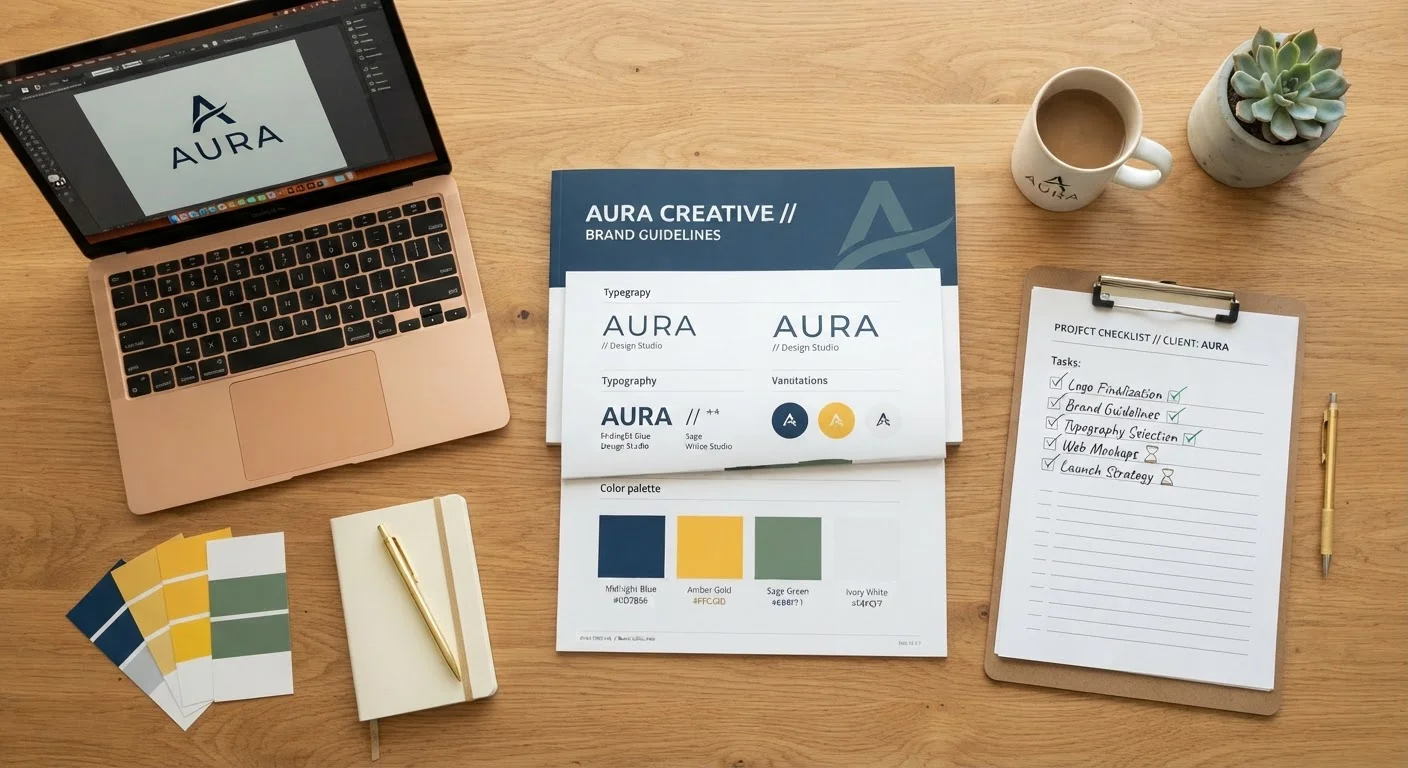
Brand style guide, color swatches, and a checklist on a professional desk workspace.

Key Takeaways

Brand strategy, visual identity, and messaging must be finalized before any public launch.
Legal protections — including trademark searches and domain registration — are non-negotiable pre-launch steps.
Consistency across digital touchpoints is a measurable brand readiness benchmark.
A brand readiness audit reduces costly post-launch corrections and mixed market signals.
External validation from target customers strengthens brand clarity before go-live.
45–90 min

Summary

24 items · 45–90 minutes

Why Brand Readiness Matters Before You Go to Market

Launching before your brand is ready is one of the most common — and costly — mistakes US businesses make. First impressions in competitive markets are difficult to reverse: inconsistent messaging, unprotected intellectual property, or a visual identity that doesn't reflect your positioning can undermine customer trust before you've earned it.

This checklist is designed for business owners, marketing leads, and founding teams preparing to take a brand to market for the first time, or to relaunch after a significant repositioning. It covers four critical readiness domains: strategy, visual identity, messaging, and legal protection. Work through each group systematically, and do not treat any must item as optional.

Note that brand readiness is distinct from campaign readiness. If you're also preparing a paid or organic marketing campaign, review the pre-launch campaign readiness checklist for complementary steps specific to campaign execution.

Brand Strategy Foundation

Define your brand purpose and the core problem your business solves for a specific target audience. Must
Document your brand positioning statement, including your category, target customer, key differentiator, and proof points. Must
Identify your two or three primary competitors and articulate how your brand is meaningfully different. Must
Establish your brand values — a short list of principles that will guide internal decisions and external communications. Should
Define your target audience persona, including demographics, goals, and the specific pain points your brand addresses. Must

Visual Identity

Finalize a primary logo and at least one approved variation (horizontal, stacked, or icon-only) for different use cases. Must
Establish a brand color palette with defined hex, RGB, and CMYK values for both digital and print applications. Must
Select and license brand typography — a primary typeface and a secondary typeface — with clear usage guidelines. Must
Create a basic brand style guide documenting logo usage rules, color codes, typography, and image direction. Should
Prepare properly sized and formatted brand assets for all digital channels you plan to activate at launch. Must
Review all visual assets for accessibility — confirm sufficient color contrast ratios per WCAG guidelines. Should

Brand Messaging

Write a concise brand tagline or value proposition that communicates your core benefit in one or two sentences. Must
Define your brand voice attributes (e.g., authoritative, approachable, direct) and document examples of on-brand versus off-brand language. Should
Draft a standard company description in three lengths — one sentence, one paragraph, and a full bio — for press, directories, and profiles. Should
Validate core messaging with a sample of target customers through interviews, surveys, or concept tests before launch. Nice to have
Ensure all customer-facing copy is reviewed for clarity, accuracy, and alignment with your defined brand voice. Must

Legal and Digital Protections

Conduct a comprehensive trademark search through the USPTO database to confirm your brand name and logo do not infringe existing marks. Must
Register your primary domain name and secure common variations and misspellings to protect your brand online. Must
Claim your brand name on all major social media platforms you plan to use, even if activation is planned for a later date. Must
File a trademark application with the USPTO if your brand name and logo meet the registrability requirements — consult a qualified IP attorney. Should
Ensure your website includes a privacy policy, terms of use, and any required disclosures that comply with applicable US federal and state regulations. Must
Confirm that any images, fonts, or creative assets in your brand identity are properly licensed for commercial use. Must
Review any partnership, franchise, or licensing agreements that may affect how your brand may be presented or used by third parties. Nice to have

Tools and Resources to Support Your Brand Audit

Running a thorough brand readiness review requires a small but purposeful set of resources. The tools below help you document decisions, validate assets, and confirm legal standing — all before you commit to a public launch.

Required

USPTO Trademark Electronic Search System (TESS)

Search existing US trademark registrations to verify your brand name and logo do not conflict with protected marks.

Required

Brand Style Guide Template

A structured document (digital or printed) that standardizes logo usage, colors, typography, and image guidelines across your team.

Required

Domain Registrar

Register and manage your primary domain name and brand-protective variations before your public launch.

Optional

Color Contrast Checker

Verify that your brand color combinations meet WCAG accessibility contrast ratio requirements for digital applications.

Optional

Customer Interview or Survey Tool

Collect structured feedback from target audience members to validate messaging clarity and brand perception pre-launch.

Optional

Asset Management Platform

Centralize and organize approved brand files so every team member and external partner accesses only current, approved assets.

Don't Skip the Trademark Search

Launching under a brand name that conflicts with an existing trademark — even unintentionally — can result in cease-and-desist demands, costly rebranding, and litigation. A USPTO trademark search is a minimum step; many businesses also benefit from a broader common-law search conducted by a qualified intellectual property attorney. Do not rely solely on domain availability or social media username availability as proof of brand clearance.

Once you've confirmed brand readiness, consider whether your business financial infrastructure is equally prepared. If you're planning to secure financing alongside your launch, the business credit profile preparation checklist provides a structured framework for getting lender-ready. Similarly, if funding grants may be part of your growth plan, review the grant readiness checklist for business applicants before submitting any applications.

Brand Readiness Is Not a One-Time Event

As your business grows, your brand must be periodically audited for consistency, relevance, and legal standing. Staff turnover, new partnerships, product expansions, and market shifts can all introduce brand drift. Build a practice of annual brand reviews using this checklist as a baseline, and revisit legal protections — particularly trademark registrations — as you enter new product categories or geographic markets.

This article provides general business and marketing information for educational purposes only. It does not constitute legal, financial, or intellectual property advice. Consult a qualified attorney or licensed professional for guidance specific to your business situation.

Marketing Essentials Editorial Team is the collective byline for our editorial team and contributor network. Articles published under this byline or an editorial pen name are researched, written, and reviewed according to our editorial standards for clarity, consistency, and independence before publication.

View all articles by Marketing Essentials Editorial Team →
Disclaimer: The content on this site is for informational purposes only and is not a substitute for professional advice. Always consult a qualified professional for guidance specific to your situation.