

Key Takeaways
Our Verdict
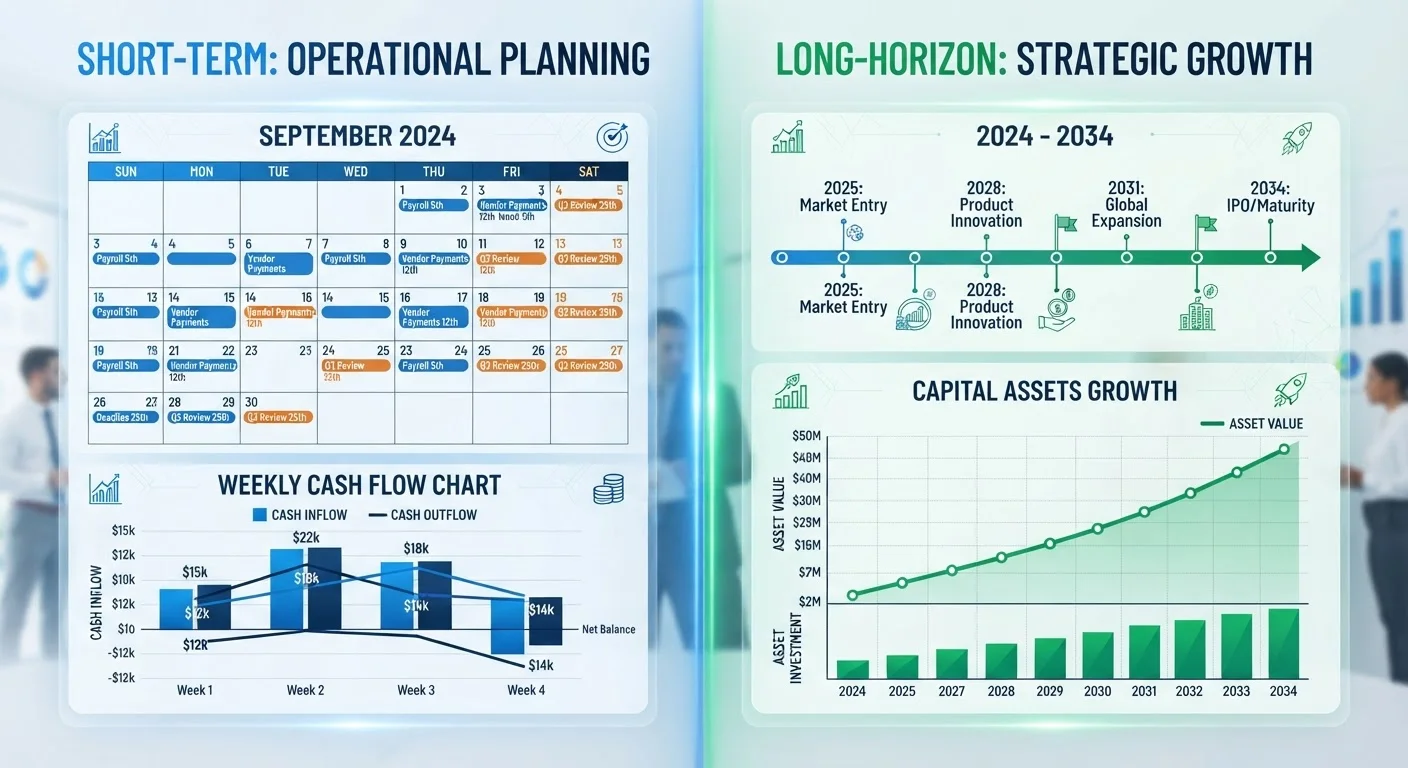
Neither loan duration is universally superior - the right choice depends entirely on what the funds will accomplish and how the business generates cash. Short-term facilities suit cyclical or working-capital needs where repayment can be tied to near-term revenue; long-term loans are appropriate when financing durable assets whose value accrues over years. Mismatching duration to purpose is the most common and costly borrowing mistake.
| Best for | Recommended |
|---|---|
| Bridging seasonal cash gaps or funding inventory cycles | Short-term loan |
| Purchasing equipment, real estate, or making major capital improvements | Long-term loan |
| Businesses with tight monthly cash flow needing manageable payments | Long-term loan |
| Operators wanting to minimize total interest cost on smaller funding needs | Short-term loan |
How Loan Duration Shapes the Cost of Borrowing
Loan duration - the period over which principal and interest are repaid - directly determines two competing financial pressures: periodic payment size and total interest paid over the life of the facility. Understanding this trade-off is foundational before evaluating any borrowing option. For a broader orientation to the lending landscape, see The Business Lending Landscape: A Map for First-Time Borrowers.
A short-term loan compresses repayment into months rather than years. Because principal is retired quickly, the lender's exposure window is narrow - but that same compression means each payment is larger relative to the amount borrowed. A long-term loan spreads principal across a much longer schedule, reducing individual payments while extending the period during which interest accrues. On identical principal at an identical rate, the long-term borrower typically pays substantially more interest in total.
Neither structure is categorically cheaper. The relevant comparison is always: does the asset or purpose being financed generate sufficient return - and over what horizon - to service this particular structure?
~60%
SMBs citing cash flow as top financial challenge
Federal Reserve Small Business Credit Survey data consistently shows cash flow management as the leading financial concern among small and mid-sized businesses in the US.
10 years
Maximum SBA 7(a) working capital loan term
SBA guidelines allow working capital loans under the 7(a) program to extend up to 10 years, with real estate facilities eligible for up to 25 years.
Defining Short-Term vs. Long-Term Business Loans
Short-term business loans generally carry maturities from three months to roughly 18-24 months. They include merchant cash advances, short-term term loans, and many lines of credit draw-downs. Lenders typically require less collateral but compensate through higher rates or fees, because the abbreviated window leaves less time to assess repayment behavior. These facilities suit working capital needs: bridging a payroll gap, purchasing seasonal inventory, or covering a temporary revenue shortfall.
Long-term business loans generally span two years to ten years or more - SBA 7(a) loans, for example, can reach 10 years for working capital and 25 years for real estate. They typically carry lower rates than short-term products but require stronger documentation, collateral, and underwriting scrutiny. They suit capital expenditures: equipment, real estate acquisition, or significant leasehold improvements whose productive life justifies years of repayment.
For a detailed look at how term loans, lines of credit, and other structures differ mechanically, see Term Loans, Lines of Credit, and Invoice Financing. Collateral considerations that affect both durations are covered in Secured vs. Unsecured Business Loans.
| Short-Term Loan | Long-Term Loan | |
|---|---|---|
| Typical maturity | 3 months - 24 months | 2 years - 25 years |
| Periodic payment size | Higher relative to principal | Lower relative to principal |
| Total interest paid | Lower on small balances | Higher due to extended accrual |
| Collateral requirements | Often lighter or none | Typically required |
| Underwriting intensity | Faster, less documentation | Rigorous, full documentation |
| Best suited for | Working capital, inventory, gaps | Equipment, real estate, capex |
| Rate environment | Higher rates or fees common | Lower rates, longer risk window |
The Duration-Matching Principle
The most durable rule in business lending is straightforward: match the loan's term to the productive or economic life of what the funds finance. Financing a piece of equipment with a seven-year useful life on a six-month loan creates repayment stress - the asset hasn't yet generated returns sufficient to retire the debt. Conversely, financing a 60-day inventory cycle with a five-year loan means paying interest for years on value that was already converted into revenue and profit long ago.
Duration mismatches are the most common source of avoidable debt distress for small and mid-sized businesses. Balancing short-term needs with long-term financial vision is a broader planning challenge this principle reflects.
Apply the Productive Life Test
Before selecting a loan term, estimate how long the financed asset or initiative will generate measurable returns. If a piece of equipment has a five-year useful life, a three-to-five-year loan aligns repayment with value creation. If you're bridging a 90-day receivables gap, a short-term line of credit avoids years of unnecessary interest expense. Writing this analysis down - even briefly - clarifies the decision and strengthens your application narrative with lenders.
Cash flow predictability also matters. A business with highly seasonal or irregular revenue may find long-term fixed payments easier to plan around, even for shorter-horizon needs - provided total interest cost remains acceptable. Conversely, a business with predictable monthly inflows can often absorb higher short-term payments comfortably.
Government-Backed and Alternative Structures
SBA loan programs occupy a unique position: they offer long-term structures - sometimes with below-market rates - for purposes that conventional banks might not finance at equivalent terms. The trade-off is a more intensive application process and longer approval timelines. SBA Loans vs. Conventional Bank Loans provides a direct comparison of eligibility, rates, and timelines.
Alternative lenders - online platforms, fintech lenders, community development financial institutions (CDFIs) - often specialize in shorter durations, offering faster approvals and more flexible underwriting in exchange for higher costs. For sector-specific considerations, operators in hospitality and food service can reference Short-Term vs. Long-Term Lending for Hospitality Operations.
Before signing any facility, review key terms carefully. Business Loan Terminology You Should Know Before Signing Anything defines concepts like APR, amortization, prepayment penalties, and covenants that appear in virtually every agreement.
This article provides general financial information for educational purposes only and does not constitute personalized financial, legal, or tax advice. Loan terms, eligibility criteria, and costs vary by lender and individual circumstances. Consult a licensed financial adviser, accountant, or attorney before making borrowing decisions for your specific situation.