

Key Takeaways
Our Verdict
Franchise and independent hotel models each carry genuine operational advantages and meaningful trade-offs. Franchise ownership suits operators who value system support, brand visibility, and proven processes but are willing to accept constrained autonomy and recurring fees. Independent ownership rewards operators with the resources and expertise to build differentiated guest experiences and manage their own distribution effectively.
| Best for | Recommended |
|---|---|
| Operators entering a competitive market without established brand recognition | Franchise Model |
| Experienced hoteliers seeking full creative and pricing control | Independent Model |
| Owners prioritising a turnkey operational framework and corporate support | Franchise Model |
| Properties targeting niche or boutique traveller segments | Independent Model |
The Core Distinction: Systems vs. Autonomy
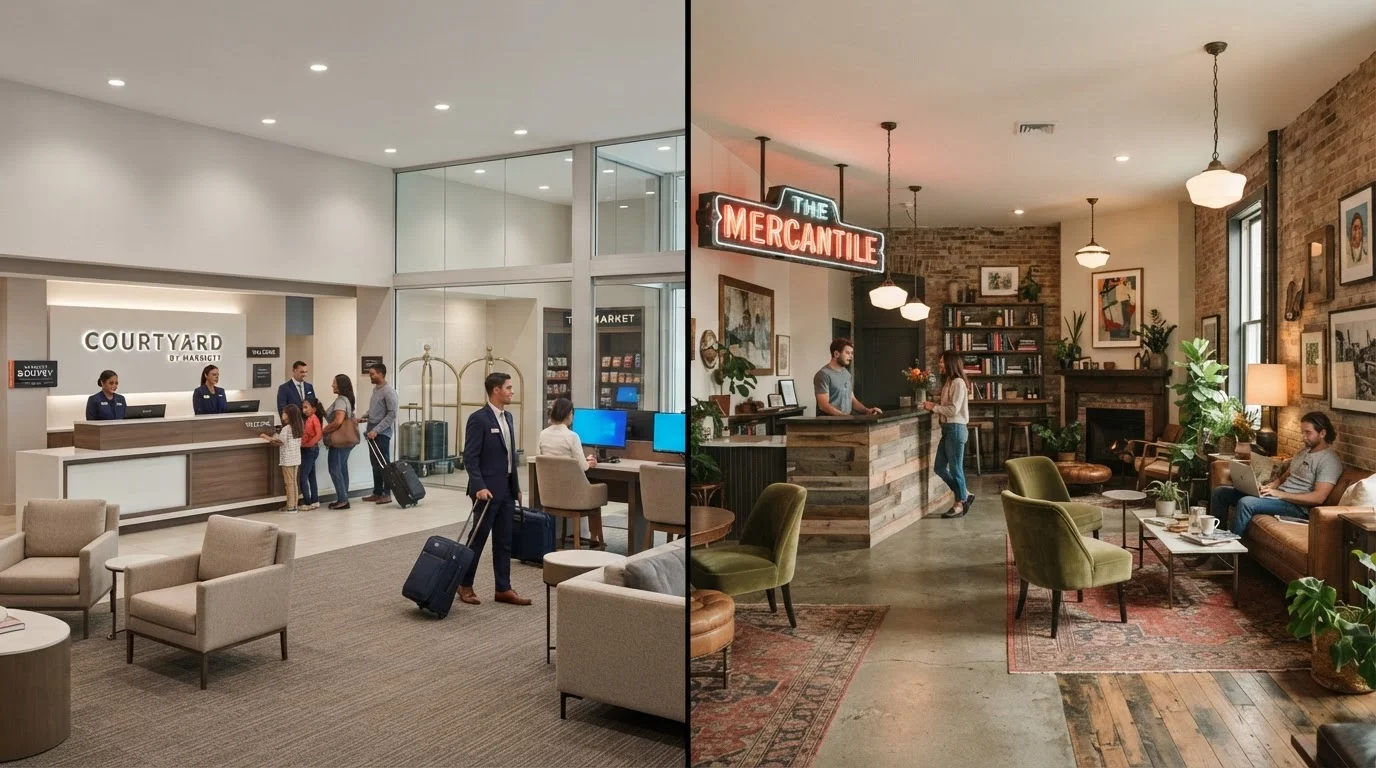
The choice between operating a franchised hotel and managing an independent property is fundamentally a trade-off between structured support and operational freedom. Franchise agreements license a brand's name, reservation technology, loyalty program, and operating standards to the property owner - in exchange for ongoing fees and compliance with brand requirements. Independent operators retain complete control over every guest-facing and back-of-house decision, but bear the full cost of building those systems themselves.
For a complete operational overview, understanding how each model distributes responsibility across departments is the essential starting point. In practice, the difference surfaces in daily decisions about staffing, pricing, procurement, and guest experience delivery.
| Franchise Model | Independent Model | |
|---|---|---|
| Brand Recognition | Established brand, immediate guest trust | Must build reputation independently |
| Operational Standards | Franchisor-defined, audited regularly | Owner-defined, fully flexible |
| Fee Obligations | Royalties, marketing, technology fees | No ongoing franchise fees |
| Distribution Access | CRS, loyalty program, brand.com traffic | Self-managed OTA and direct channels |
| Staff Training | Corporate programs and e-learning provided | Developed and funded internally |
| Pricing Flexibility | Constrained by brand rate guidelines | Full dynamic pricing autonomy |
| Vendor Procurement | Approved vendor lists required | Open market sourcing available |
Brand Standards and Day-to-Day Operations
Franchise agreements typically require adherence to detailed brand standards covering physical product specifications, housekeeping protocols, food and beverage presentation, staff uniforms, and digital systems. Franchisors conduct regular quality assurance audits, and sustained non-compliance can result in financial penalties or contract termination. This structure benefits operators who want clarity - staff know exactly what is expected, and guests arrive with calibrated expectations.
Independent hotels define their own service standards, which creates flexibility but demands stronger internal leadership. Without a franchisor's training curriculum, independent operators must develop proprietary onboarding programs and service playbooks. Decisions about food and beverage operations inside an independent property, for example, can be tailored to local sourcing and pricing strategies unavailable to a franchised property bound by approved vendor lists.
Audit Standards Before Signing
Before executing a franchise agreement, request the brand's current quality assurance checklist and speak with existing franchisees about audit frequency and remediation timelines. Understanding what 'compliance' requires operationally - not just contractually - is essential for accurate cost and staffing projections.
Staffing, Training, and Cost Structures
Franchise operators generally gain access to corporate training platforms, e-learning modules, and brand-certified onboarding pathways. This reduces the time and internal cost required to bring new hires to competency, which matters especially in a high-turnover environment. However, franchise fee structures - typically comprising an initial fee, ongoing royalties (often 4-6% of gross room revenue), marketing contributions, and technology fees - meaningfully affect operating margins.
Independent operators carry no royalty burden, but their total cost of ownership shifts toward building and maintaining equivalent capabilities in-house. This includes investing in property management systems, channel management software, revenue management tools, and marketing resources. The staffing models and cost structures of any hotel are further shaped by whether the property operates under a brand umbrella or independently.
4-6%
Typical franchise royalty as % of gross room revenue
Industry sources generally cite franchise royalty fees in the 4-6% of gross room revenue range, varying by brand tier and agreement terms.
~70%
Share of US hotel rooms under a brand flag
The American Hotel & Lodging Association has noted that the majority of US hotel rooms operate under some form of brand affiliation.
Distribution, Revenue Management, and Financial Planning
One of the most concrete advantages of franchise affiliation is access to a central reservation system (CRS) and a loyalty program that drives direct bookings. Franchise-affiliated properties typically benefit from brand.com traffic and negotiated online travel agency (OTA) agreements. For independent hotels, building a comparable distribution stack requires direct investment in channel management technology and marketing spend - costs that must be factored into long-term financial planning.
When evaluating financing options for either model, operators should consider how fee obligations or infrastructure investment requirements shape debt serviceability. The choice between debt and equity financing interacts directly with how franchise fees or independent infrastructure costs affect projected cash flow. Operators building growth strategies should also review organic vs. franchise expansion models as part of their broader planning process.
This article is for general informational purposes only and does not constitute financial, legal, or investment advice. Operators should consult qualified advisers before making structural or financing decisions for their properties.