

Key Takeaways
Intermodal Freight
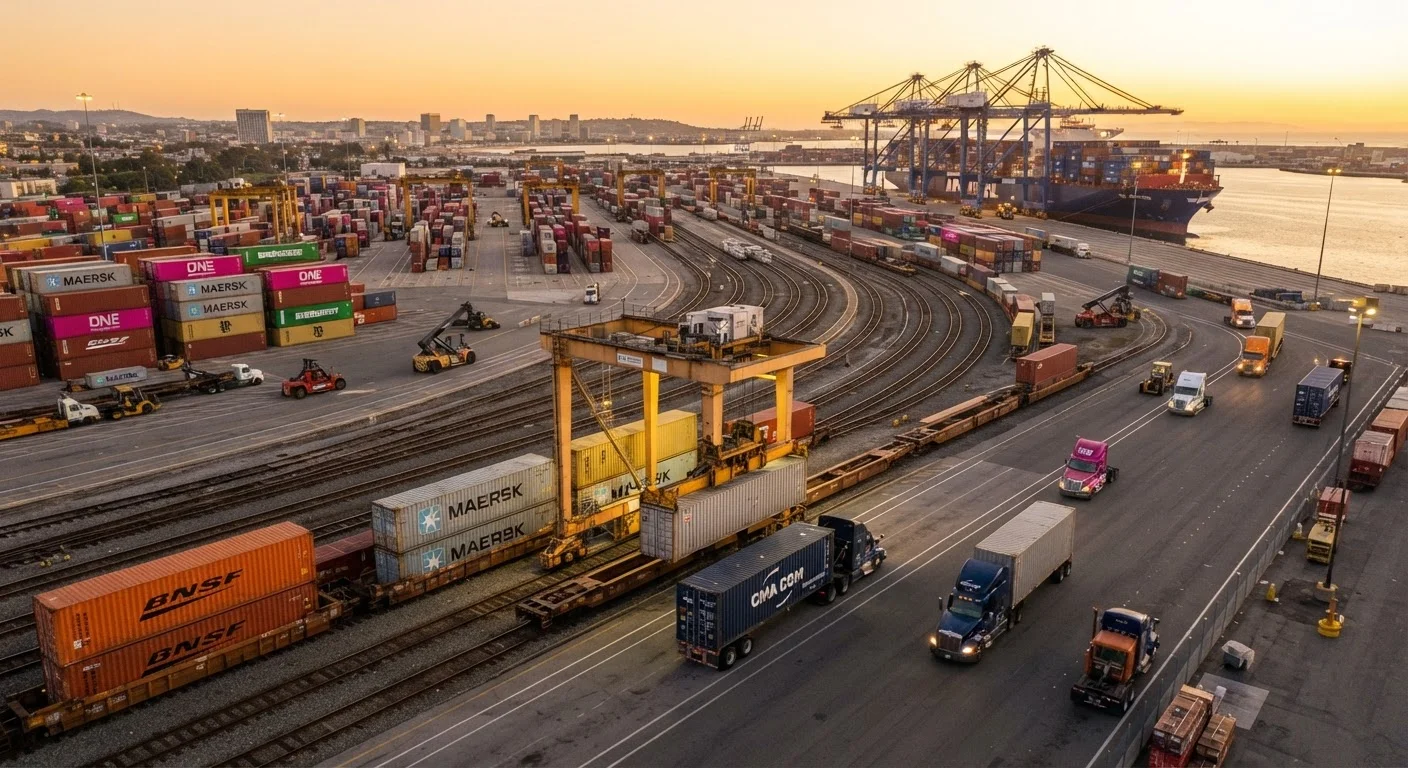
Intermodal freight is a shipping method that moves cargo in a single standardized container across two or more transportation modes - typically combinations of truck, rail, and ocean vessel - without unloading the goods between transfers. The container itself remains sealed and intact throughout the journey, while only the conveyance changes. This approach allows businesses to take advantage of the cost and distance strengths of each mode while minimizing cargo handling.
Intermodal is distinct from multimodal shipping in that each transport leg under intermodal is governed by a separate contract and liability framework; multimodal uses a single through-bill of lading covering all legs.
How Intermodal Freight Actually Works
The mechanics of intermodal shipping begin with a standardized container - typically a 20-foot or 40-foot ISO unit - loaded at the shipper's facility. That container travels by drayage truck to a rail ramp or seaport, where it is lifted onto a flatcar or vessel without the goods inside being touched. At the destination rail ramp or port, another drayage truck picks up the container and delivers it to the consignee's facility.
This container integrity is what makes intermodal operationally distinct from traditional break-bulk freight, where goods are unloaded and reloaded between each mode. Because cargo stays sealed, handling-related damage risk is reduced and security is easier to maintain across long corridors.
For businesses newer to logistics terminology, our freight terms reference guide explains concepts like drayage, through-bills of lading, and intermodal equipment in plain language.
500+ miles
Minimum lane distance for intermodal cost advantage
Industry logistics frameworks generally identify 500 miles as the threshold where rail-based intermodal begins to compete meaningfully with over-the-road full truckload pricing.
3-4x
Rail fuel efficiency vs. truck per ton-mile
The Association of American Railroads has reported that freight railroads move a ton of freight approximately 400 miles on a single gallon of fuel, reflecting rail's structural efficiency advantage.
~28 million
Intermodal loadings annually in the US
The Association of American Railroads tracks intermodal volume as one of the largest and fastest-growing segments of the US freight rail industry.
Where Intermodal Delivers Real Advantages
Intermodal's primary value proposition is cost efficiency on long-haul lanes. Rail moves freight at roughly three to four times the fuel efficiency of over-the-road trucks per ton-mile, and that efficiency translates to lower carrier costs that can be passed to shippers on the right lanes. The general industry benchmark is that intermodal becomes competitively priced against full truckload at distances exceeding 500 miles, and increasingly advantageous beyond 1,000 miles.
Beyond cost, rail network capacity is a meaningful advantage during periods of tight truck capacity. When spot truck rates spike, shippers with established intermodal relationships can often access more stable contract-based rail pricing. This is one reason many logistics managers treat intermodal as a deliberate complement to over-the-road trucking rather than a replacement - for a deeper look at how pricing structures work on the truck side, see spot rates vs. contract rates in trucking.
Environmental considerations are also increasingly relevant. Rail generates significantly lower greenhouse gas emissions per ton-mile than trucking, which matters for businesses with sustainability reporting obligations or carbon reduction commitments.
Evaluate Intermodal by Lane, Not by Default
Not every freight lane benefits equally from intermodal. Before committing to rail-based moves, analyze your specific corridors for distance, volume consistency, and delivery window flexibility. Lanes under 500 miles or with irregular shipment patterns may see limited cost benefit once drayage and terminal dwell are factored in. A lane-by-lane comparison against your current over-the-road rates is the most reliable basis for a decision.
The Trade-Offs: Transit Time, Visibility, and Complexity
Intermodal is not a universal solution. The most significant trade-off is transit time. Rail schedules are fixed, terminals introduce dwell time, and drayage adds pickup and delivery windows at both ends. A domestic over-the-road truck move that takes two days may take five or more days via intermodal rail on the same corridor. For time-sensitive freight - seasonal goods with hard delivery deadlines, perishables, or expedited orders - intermodal's pace is often a disqualifying factor.
Cargo visibility is a second operational challenge. Tracking on the rail segment of an intermodal move has historically been less granular than GPS-tracked over-the-road trucking. Shippers relying on real-time inventory or just-in-time production schedules may find milestone-based updates insufficient for their planning needs. Technology investment by Class I railroads has improved this, but gaps between mode handoffs remain a realistic expectation.
Complexity increases when the move involves an international ocean leg. A shipment from a manufacturer in Southeast Asia to a US distribution center might involve ocean transit, port drayage, domestic rail, and final-mile truck - each with separate documentation, liability frameworks, and potential delays. Comparing air and ocean freight on international lanes involves similar trade-off analysis, particularly when speed is a priority.
Fitting Intermodal Into a Broader Freight Strategy
Intermodal works best as one mode within a diversified freight strategy rather than as a single-mode solution. Businesses that regularly ship full container loads on consistent, high-volume lanes - particularly transcontinental US lanes or import/export corridors - stand to benefit most. Those with irregular volumes, fragmented shipments, or time-sensitive delivery requirements may find LTL or FTL trucking more operationally appropriate for certain moves.
A practical starting point is lane analysis: identify the corridors where you regularly move full container equivalents of freight over 500+ miles, then model intermodal cost and transit against your current over-the-road spend. For a broader framework on how freight modes interact within US logistics, freight shipping in the US provides the structural context.
Working with an intermodal marketing company (IMC) or a third-party logistics provider experienced in rail can simplify the coordination burden, particularly for businesses without dedicated carrier relationships. As with any freight decision, the right mode depends on your specific freight characteristics, lane geography, cost targets, and service requirements.
This article is for informational and educational purposes only. Freight costs, transit times, and service characteristics vary significantly by carrier, lane, and market conditions. Consult a qualified logistics professional for guidance specific to your business operations.