

Key Takeaways
Start here
What Freight Shipping Actually Means
Next
The Main Freight Modes Explained
Build vocabulary
Core Freight Terms Every Shipper Should Know
Understand costs
How Pricing Is Structured
Apply knowledge
Putting It All Together: Choosing the Right Approach
What Freight Shipping Actually Means
Freight shipping is the commercial movement of goods in bulk or quantity - as opposed to parcels or individual packages - from one business location to another. In the US, it underpins virtually every supply chain: raw materials moving to manufacturers, finished goods reaching distribution centers, and products delivered to retail locations or end customers.
Unlike parcel carriers, freight involves larger, heavier shipments typically exceeding 150 pounds and requires distinct documentation, pricing structures, and handling procedures. Understanding the fundamentals helps businesses make smarter decisions about cost, speed, and risk as goods move through their supply chains. For a deeper reference on the terminology you'll encounter throughout, see Freight Terms Decoded.
The Main Freight Modes Explained
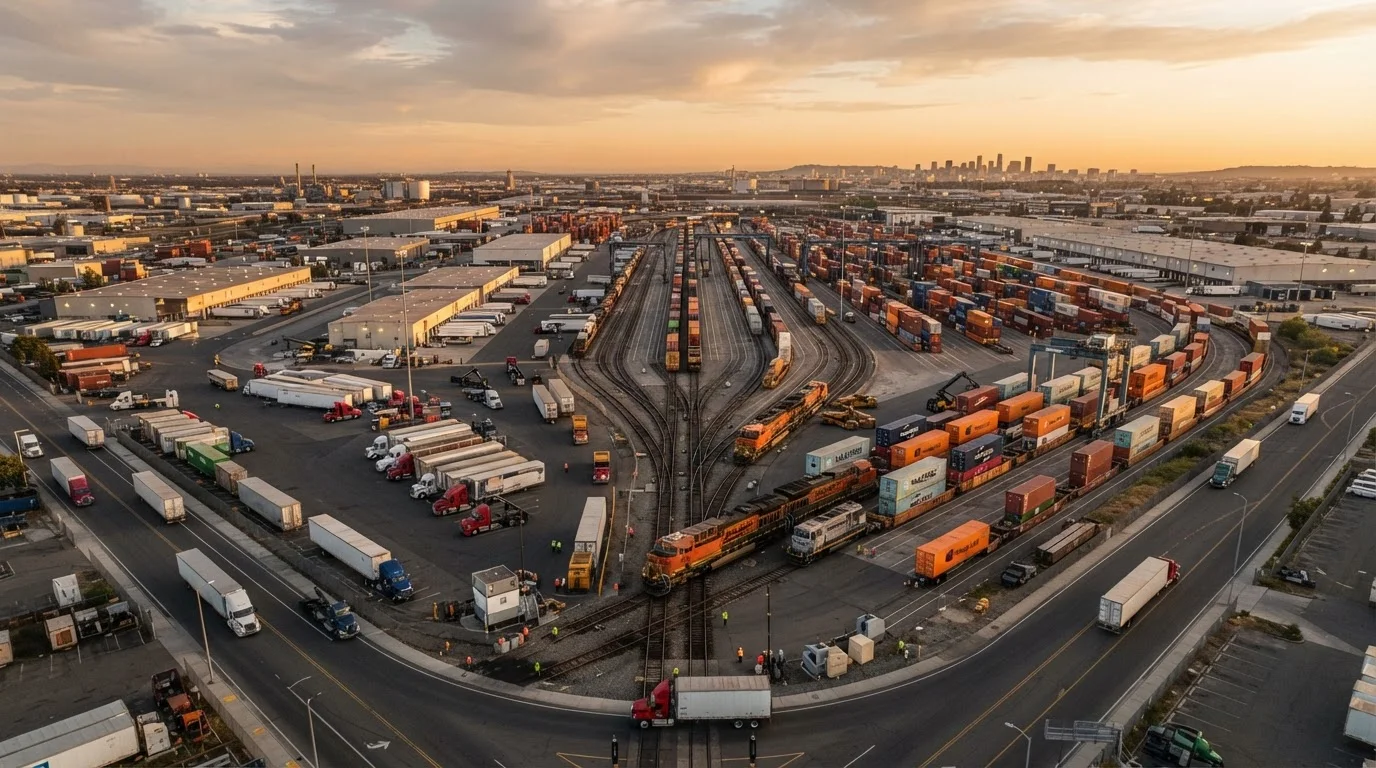
Freight moves via four primary modes, often in combination:
- Trucking (Road): The dominant mode in the US. Trucks handle the majority of domestic freight by value and reach virtually every destination. Road freight divides into LTL (Less Than Truckload) - where multiple shippers share trailer space - and FTL (Full Truckload), where one shipper occupies the entire trailer.
- Rail: Cost-effective for heavy, bulk, or non-urgent freight moving long distances. Rail excels for commodities like coal, grain, chemicals, and intermodal containers. Transit times are slower than truck but per-unit costs are significantly lower on long hauls.
- Air Freight: The fastest mode and the most expensive per pound. Air is used for time-critical shipments, high-value goods, or perishables where speed justifies the premium.
- Ocean Freight: Essential for international trade and cost-efficient for large-volume imports and exports. Ocean freight moves in standardized containers (typically 20- or 40-foot TEUs) and is measured in days to weeks, not hours.
Many shipments use more than one mode. Combining rail and truck, for example, can reduce costs on transcontinental lanes. Intermodal freight is worth exploring once you've established the basics. See also our overview of logistics operations for context on how freight fits into broader supply chain management.
LTL vs. FTL: A Simple Rule of Thumb
If your shipment fills more than roughly half a standard 53-foot trailer, FTL often becomes competitive with LTL on price - and typically offers faster transit and fewer handling touchpoints. Get quotes for both when your load is in the 10,000-20,000 lb range to compare true total cost.
Core Freight Terms Every Shipper Should Know
LTL (Less Than Truckload)
A shipping option where your cargo shares trailer space with other shippers' goods. You pay only for the space your shipment occupies, making it cost-effective for smaller loads.
FTL (Full Truckload)
A shipping arrangement where one shipper's cargo occupies an entire truck trailer. Best suited for large volumes, time-sensitive freight, or goods requiring minimal handling.
Freight Class
A standardized rating from 50 to 500 assigned to LTL shipments based on density, handling needs, and liability. A higher class generally means a higher base rate.
Bill of Lading (BOL)
The core legal document for a freight shipment. It acts as a contract between shipper and carrier, a receipt confirming goods were picked up, and a record of shipment details.
Accessorial Fees
Additional charges added to a base freight rate for extra services or circumstances - such as liftgate use, inside delivery, or truck detention time.
Drayage
Short-haul truck transport that connects a port, rail yard, or terminal to a nearby warehouse or facility. Often the first or last leg of an intermodal shipment.
Intermodal Shipping
Moving freight using two or more transportation modes - such as ocean container transferred to a rail car and then a truck - in a single, coordinated journey.
Fuel Surcharge
A variable fee added to freight rates to account for fluctuating diesel fuel costs. It's typically indexed to a published fuel price index and adjusted regularly.
Beyond mode selection, freight shipping has its own vocabulary that appears on every quote, contract, and invoice. A few terms are foundational:
- Bill of Lading (BOL): The primary shipping document - a contract between shipper and carrier, a receipt of goods, and sometimes proof of title.
- Freight Class: A standardized classification (ranging from 50 to 500) used in LTL shipping to determine base rates. Class is assigned based on density, stowability, handling difficulty, and liability.
- FOB (Free On Board): Defines where ownership and risk transfer between buyer and seller. FOB Origin means the buyer takes ownership at pickup; FOB Destination means the seller retains responsibility until delivery.
- Accessorial Fees: Charges beyond the base freight rate - for services like liftgate delivery, inside delivery, or detention (when a truck waits beyond the allotted unloading window). These can meaningfully affect total shipping cost.
- Drayage: Short-distance truck movement, typically connecting a port or rail terminal to a nearby warehouse or distribution facility.
For businesses shipping internationally, Incoterms govern risk and cost allocation between parties in cross-border transactions. Incoterms decoded provides a plain-language guide to the most common terms.
How Pricing Is Structured
Freight pricing is rarely a single flat number. A typical invoice includes a base rate - calculated from shipment weight, distance, and freight class - layered with variable surcharges. Common additions include fuel surcharges (indexed to diesel prices), residential delivery fees, liftgate charges, and detention fees.
Shippers generally access rates in one of two ways: spot rates, negotiated for a single shipment in the open market, or contract rates, agreed upon for a defined volume over a set period. Spot rates fluctuate with market supply and demand; contract rates offer predictability in exchange for volume commitments. Spot rates vs. contract rates is an important planning decision for any shipping-dependent business.
For a line-by-line breakdown of what appears on a freight invoice, the freight bill explained walks through each charge in detail.
Fuel Surcharges Fluctuate Frequently
Fuel surcharges are indexed to diesel price benchmarks and can change weekly. When comparing freight quotes, always look at the all-in price rather than the base rate alone. A lower base rate paired with a high fuel surcharge can result in a more expensive shipment overall.
Putting It All Together: Choosing the Right Approach
No single freight mode or pricing strategy is universally optimal. The right combination depends on shipment characteristics (weight, dimensions, fragility), required transit speed, budget constraints, and supply chain structure. A business shipping pallets of consumer goods across 500 miles weekly will make very different choices than one moving a single oversized industrial component.
A few practical principles guide most decisions:
- Match mode to shipment profile. Large, non-urgent, long-distance loads favor rail or intermodal. Time-critical or high-value goods often justify air or dedicated FTL.
- Understand your total landed cost. Base rates alone don't tell the full story - accessorial fees, insurance, and transit-time-related inventory costs all contribute to true shipping cost.
- Consider insurance separately. Carrier liability has legal limits and may not cover full cargo value. Freight and trucking insurance concepts deserve independent evaluation for any business moving goods regularly.
Building freight literacy takes time, but even a foundational understanding of modes, terms, and pricing structures puts businesses in a stronger position when working with carriers, brokers, and logistics partners.
This article is for informational and educational purposes only and does not constitute legal, financial, or professional logistics advice. Consult qualified professionals for decisions specific to your business circumstances.