

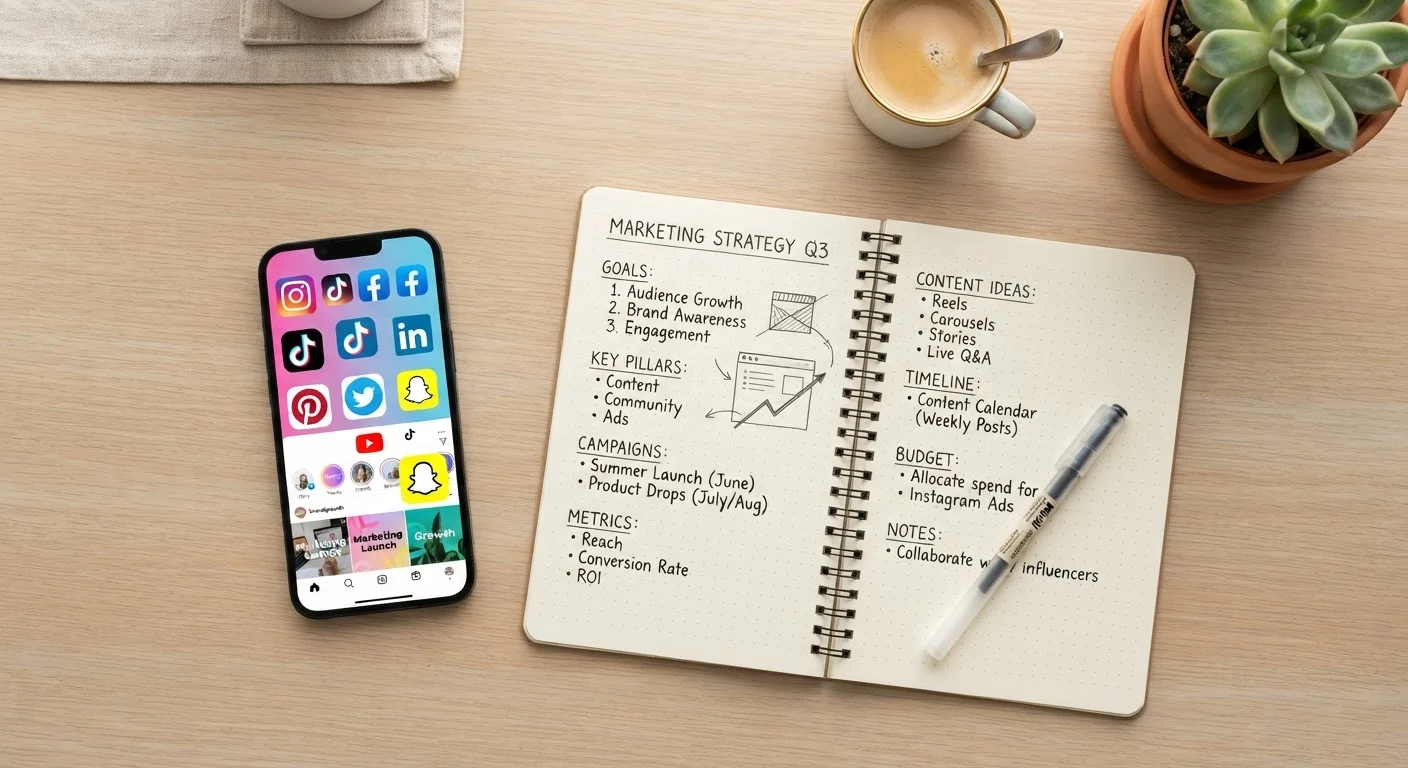
Why Platform Choice Shapes Ad Outcomes
Social media advertising is not a single channel - it is a family of distinct environments, each with its own audience composition, content norms, and ad mechanics. Treating them interchangeably is one of the most common ways businesses dilute their ad spend. The same creative, budget, and targeting logic that works on one platform may underperform significantly on another.
Effective allocation starts with understanding what each platform does structurally - its user base, dominant content format, and the purchase mindset users bring to it. See the full advertising channel landscape for broader context on how social fits among other paid media options.
Platform-by-Platform Breakdown
Meta (Facebook & Instagram)
Meta's advertising infrastructure offers the most mature targeting capabilities in social media, drawing on detailed behavioral and interest data across its family of apps. Facebook tends to index older among social platforms, making it effective for reaching established consumer segments and local audiences. Instagram skews younger and is highly visual, favoring brands with strong creative assets. Both support a wide format range: image, video, carousel, Stories, and Reels ads. Meta campaigns are well-suited to awareness, lead generation, and direct-response objectives alike.
LinkedIn is the primary channel for business-to-business (B2B) advertising. Its defining advantage is professional targeting - by job title, industry, company size, and seniority level. Cost-per-click is generally higher than consumer platforms, but the audience intent is distinct: users are in a professional mindset. Sponsored content, message ads, and lead gen forms are standard formats. LinkedIn works best when the offer is relevant to professional growth, organizational decision-making, or industry knowledge.
TikTok
TikTok's algorithm surfaces content based on engagement signals rather than follower graphs, giving advertisers access to broad audiences through interest-matched video placement. In-Feed Ads blend into the organic scroll; TopView and Branded Hashtag Challenges offer higher-impact formats. TikTok skews toward younger demographics but has expanded significantly across age groups. Creative authenticity matters more here than production polish - content that mimics native TikTok style tends to outperform traditional ad creative.
YouTube
YouTube occupies a unique position as both a social platform and the world's second-largest search engine. Skippable and non-skippable in-stream ads, bumper ads, and discovery ads serve different reach and engagement objectives. Because users often arrive with explicit content intent, YouTube can function as a mid-to-lower funnel channel - particularly when ads appear alongside relevant search-driven content. Compare this approach with paid search advertising to understand where intent-driven placement differs.
Pinterest users frequently browse in a planning or discovery mindset - researching home improvement, events, fashion, or recipes before purchasing. Promoted Pins integrate naturally into this discovery experience. The platform is particularly effective for consumer goods, lifestyle brands, and businesses with visually appealing products. Its audience is disproportionately female and skews toward households with purchasing authority.
In-Feed Ad
An advertisement that appears within a platform's organic content stream, designed to blend with native posts. Users encounter these ads while scrolling, rather than in a dedicated ad slot.
CPM (Cost Per Mille)
The cost an advertiser pays per 1,000 impressions of their ad. CPM is a common buying metric for awareness-focused campaigns where reach is the primary goal.
Lead Gen Form
A native form embedded within a social platform that collects user information without requiring a click to an external landing page. Reduces friction and typically improves completion rates.
Audience Targeting
The process of defining which users see an ad based on attributes such as demographics, interests, behaviors, or professional characteristics. Each platform offers its own targeting parameters and data sources.
Retargeting
A tactic that serves ads to users who have previously interacted with a brand - visited a website, watched a video, or engaged with a post - using platform pixels or audience matching tools.
Matching Format to Objective
Platform selection and ad format are not independent decisions - each combination implies a different engagement mechanism and measurement approach. Short-form video drives passive awareness but requires holding attention within the first two seconds. Carousel formats invite active engagement and work well for showcasing multiple products or telling a sequential story. Lead gen forms reduce friction by keeping users within the platform, improving completion rates compared to landing-page redirects.
For businesses running ads across several platforms simultaneously, format consistency - adapting creative to each environment rather than forcing uniform assets - is a key discipline. Learn more about structuring that approach in our guide to building a multi-channel advertising strategy.
Audience segmentation also interacts with platform mechanics. A firmographic segment (targeting by company size or industry) will behave differently on LinkedIn than on Meta, where the same filter is approximated through inferred interest data. See audience segmentation approaches for a detailed breakdown of segmentation methods and their platform fit.
3.07B
Monthly Active Users on Meta Platforms
Meta reports over three billion monthly active users across Facebook and Instagram as of recent company disclosures, making it the largest social advertising reach pool globally.
~4×
Higher CPM on LinkedIn vs. Consumer Platforms
Industry benchmarks consistently show LinkedIn's cost per thousand impressions runs several times higher than Meta or TikTok, reflecting its premium professional audience.
Top 2 Seconds
Critical Window for TikTok Ad Retention
Platform research and practitioner data indicate the first two seconds of a TikTok video are decisive for whether users continue watching or scroll past.
This article provides general educational information about social media advertising and does not constitute personalized marketing, financial, or business advice. Platform capabilities, pricing, and audience data change frequently. Consult qualified marketing professionals for guidance tailored to your specific business situation and objectives.