

Key Takeaways
Logistics Operations
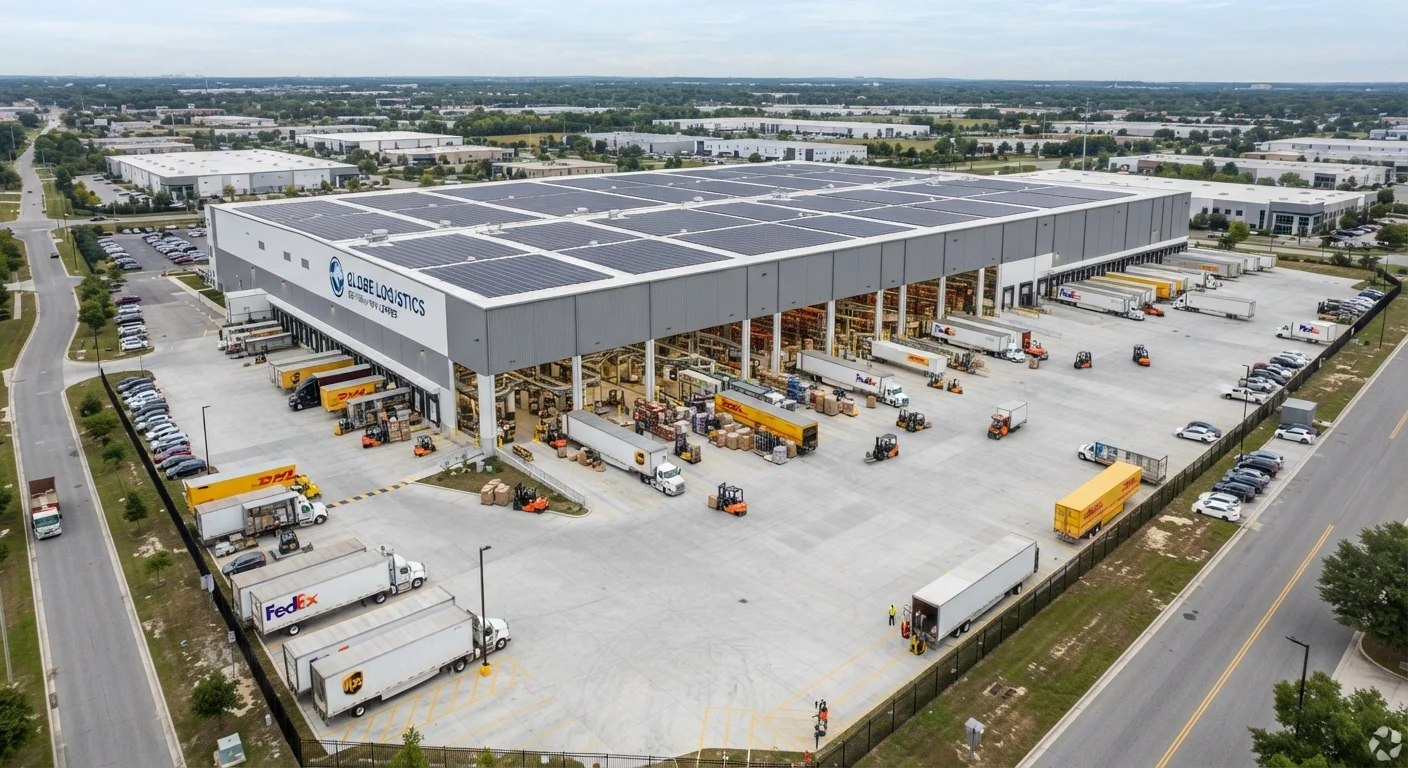
Logistics operations refers to the end-to-end systems a business uses to receive, store, process, and deliver goods to customers. It encompasses warehousing, inventory management, order fulfillment, transportation, and returns handling. Together, these functions form the operational backbone that connects a supplier's goods to the end customer.
In formal supply chain terminology, logistics operations sits within the broader supply chain management framework as the execution layer - responsible for physical goods movement and storage rather than strategic sourcing or demand planning.
What Logistics Operations Actually Covers
When business professionals talk about logistics, they often mean different things - freight rates, warehouse space, delivery timelines, or carrier contracts. In practice, logistics operations is an integrated set of systems that manages every physical touchpoint goods pass through between a supplier and a customer.
Understanding these systems as a whole - rather than as isolated functions - is foundational to running a cost-effective operation. As the supply chain management framework explains, logistics is the execution engine within the broader supply chain structure.
At its core, logistics operations includes five interconnected functions:
- Inbound receiving - accepting, inspecting, and recording goods from suppliers
- Warehousing and storage - organizing inventory within a facility for efficient retrieval
- Inventory management - tracking stock levels, locations, and movement in real time
- Outbound transportation - selecting carriers, routing shipments, and managing freight costs
- Last-mile delivery - the final leg from a distribution point to the end customer
Each function generates data that feeds the next. When that data flow breaks down - due to poor systems, manual errors, or siloed teams - delays and cost overruns follow. For a deeper look at how these functions connect end to end, see the anatomy of a supply chain.
Warehousing and Inventory: The Operational Core
Warehousing is where goods are held between inbound receipt and outbound shipment. A facility's physical layout - slot locations, pick paths, staging areas - directly affects how quickly orders can be fulfilled. Poor slotting decisions, for example, add unnecessary labor time to every pick cycle.
Inventory management runs parallel to warehousing. A warehouse management system (WMS) tracks the exact location and quantity of every SKU in real time. Without accurate inventory data, businesses risk both stockouts (lost sales) and overstock (tied-up capital and storage costs).
53%
Share of total shipping cost attributed to last-mile delivery
Industry analyses consistently estimate last-mile delivery accounts for over half of total transportation costs in e-commerce and retail logistics.
23%
Average inventory carrying cost as a percentage of inventory value
Logistics industry benchmarks estimate inventory carrying costs - including storage, insurance, and obsolescence - typically range from 20-30% of inventory value annually.
1 in 3
Consumers who will not reorder after a poor delivery experience
Customer experience research in the retail sector suggests delivery failures are among the top reasons consumers switch to a competing supplier.
Key inventory concepts businesses should understand include:
- Safety stock - buffer inventory held to absorb demand variability or supplier delays
- Reorder points - the stock level that triggers a replenishment purchase order
- Cycle counting - periodic physical verification of inventory records rather than a single annual count
The relationship between warehousing and inventory management is tightly coupled. Inaccurate put-away processes corrupt inventory records; inaccurate records produce mis-picks; mis-picks generate returns and customer complaints. Getting both right is a prerequisite for reliable order fulfillment.
Transportation and Last-Mile Delivery
Once goods are picked and packed, they enter the outbound transportation network. For most US businesses, this involves a mix of freight modes - truckload (TL), less-than-truckload (LTL), parcel carriers, and occasionally intermodal options depending on volume, distance, and cost constraints. The freight and shipping landscape offers several options, each with different cost and service trade-offs.
A transportation management system (TMS) helps businesses compare carrier rates, generate shipping labels, track shipments, and analyze freight spend. Without a TMS, businesses often default to a single carrier relationship, forgoing rate competition and visibility.
Benchmark Your Carrier Rates Regularly
Even businesses with long-standing carrier relationships benefit from periodic rate benchmarking. Freight markets shift based on capacity, fuel surcharges, and seasonal demand. Running a competitive RFP or using a TMS with rate comparison tools at least annually helps ensure your contracted rates reflect current market conditions rather than legacy pricing.
Last-mile delivery - the final segment from a distribution center or cross-dock facility to the customer's door - is consistently the most expensive part of the chain. Factors that drive up last-mile costs include residential deliveries, route density, failed first-attempt deliveries, and customer expectation for narrow delivery windows.
Businesses managing last-mile delivery should track metrics such as first-attempt delivery success rate and cost-per-delivery by zone. These metrics reveal where route optimization or carrier diversification could reduce spend without sacrificing service levels. For a fuller picture of which metrics matter most, see key logistics metrics every operations manager should track.
Building and Auditing Your Logistics Operation
For US businesses evaluating or improving their logistics setup, the practical starting point is documentation - mapping every step from inbound receiving through final delivery, identifying handoffs, and flagging where manual processes introduce error or delay. Building a logistics workflow from receiving to final delivery provides a structured approach to that exercise.
Once documented, an operational audit helps surface gaps. Areas commonly flagged in logistics audits include:
- Inconsistent receiving procedures that corrupt inventory accuracy from the start
- Lack of slotting strategy, leading to high labor costs in the pick zone
- Carrier over-reliance, with no rate benchmarking or backup options
- Absent returns processing workflow, creating inventory reconciliation problems
Businesses looking for a structured self-assessment tool can use the logistics operations audit checklist for small and mid-size businesses to evaluate each functional area systematically.
For growing businesses managing increasing order volumes, the logistics operations for growing businesses guide covers how to scale these systems without sacrificing control.
This article is for general informational and educational purposes only. It does not constitute professional logistics, financial, or legal advice. Businesses should consult qualified operations and financial professionals when making decisions specific to their circumstances.