

Key Takeaways
Cannot be blocked, skipped, or muted by audiences
Unlike digital ads, OOH placements exist in the physical environment and reach audiences regardless of ad-blocking software or content-skipping behaviour, making them particularly valuable for brand visibility.
High-frequency exposure in fixed geographic areas
Commuters and local residents pass the same placements repeatedly, building cumulative brand recognition that a single digital impression rarely achieves.
DOOH enables dynamic creative and dayparting
Digital inventory allows advertisers to rotate messages by time of day, weather conditions, or real-time data feeds - adding relevance without requiring separate physical production runs.
Broad reach with strong local market anchoring
OOH is one of few channels that guarantees physical-world presence in a defined geography, making it effective for businesses with local or regional audience priorities.
Attribution and direct measurement are limited
OOH lacks the impression-level tracking available in digital channels; marketers typically rely on modelled reach estimates and brand-lift surveys, which introduce uncertainty into ROI calculations.
Higher entry costs and multi-week commitments
Premium placements in high-traffic urban areas carry significant minimum spends and production costs, which can make OOH inaccessible for smaller budgets or short campaign windows.
Limited audience targeting at the individual level
Even with DOOH's improvements, OOH cannot match the demographic, behavioural, and intent-based targeting precision available through search or social platforms.
Creative constraints imposed by format and environment
Messages must communicate in seconds from a distance, restricting the depth and complexity of information that can be conveyed compared to digital or long-form media formats.
Our Verdict
Out-of-home advertising remains a compelling channel for building brand visibility and reaching audiences in physical environments that digital-only campaigns cannot access. Its growing digital infrastructure has improved targeting and creative flexibility, but measurement limitations and higher entry costs mean it suits brands with established awareness goals more than those chasing direct-response outcomes.
Best suited to businesses with defined geographic markets, strong brand-awareness objectives, and the budget discipline to sustain placements long enough to generate meaningful recall.
What Out-of-Home Advertising Actually Covers
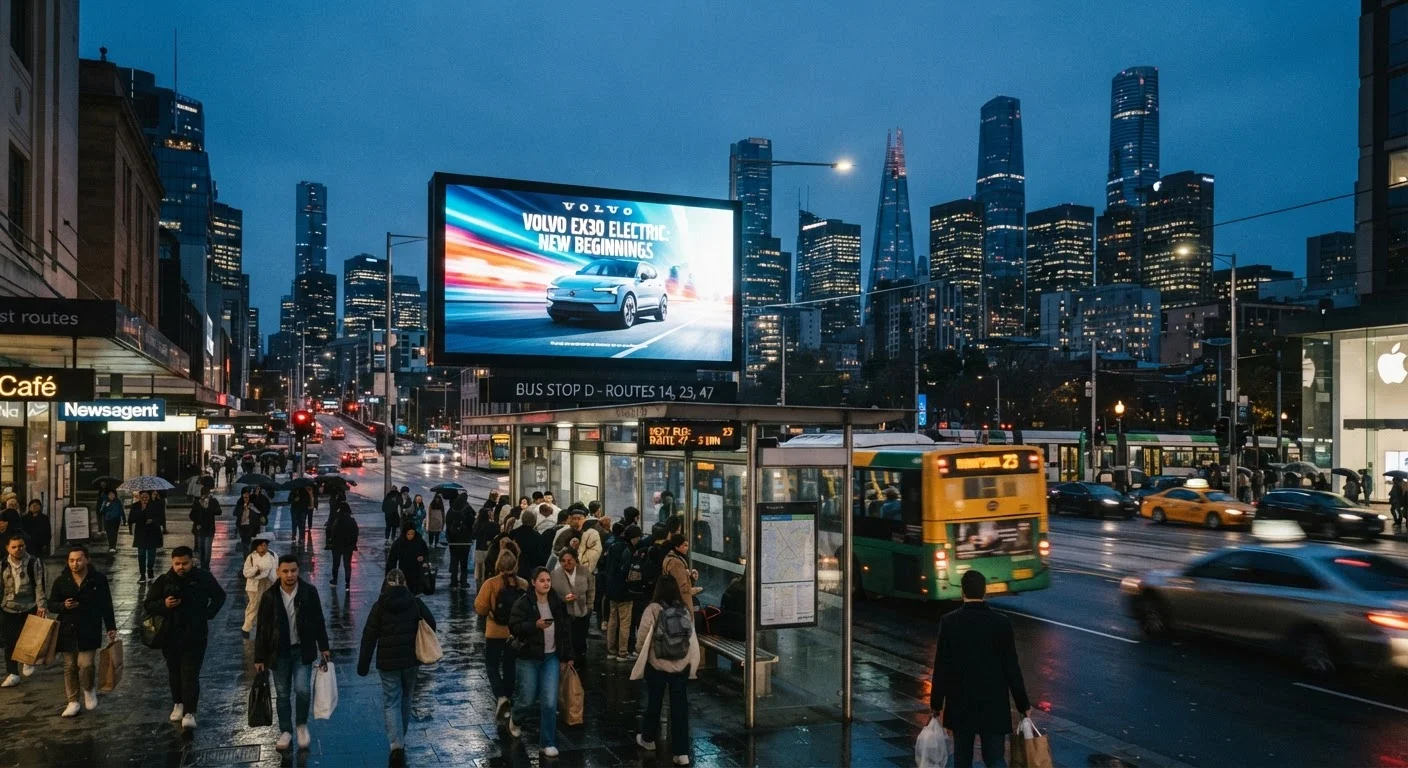
Out-of-home (OOH) advertising refers to any paid media that reaches consumers while they are outside their homes. The category is broader than most marketers assume. It includes traditional roadside billboards, but also transit advertising (bus wraps, subway station takeovers, airport displays), street furniture (bus shelters, kiosks, benches), place-based screens in gyms, malls, and healthcare waiting rooms, and a fast-growing digital layer known as DOOH - digital out-of-home.
DOOH converts physical inventory into programmatically addressable media. Instead of a static printed panel running for four weeks, a DOOH screen can rotate multiple advertisers, update creative in real time, and respond to triggers such as weather conditions, time of day, or aggregated audience data signals. For a broader map of where OOH sits relative to other paid channels, see The Advertising Channel Landscape.
The Practical Strengths of OOH
OOH's core advantage is environmental presence - it exists in the physical world and cannot be scrolled past, muted, or blocked by an ad blocker. High-traffic placements deliver repeated exposure to the same audience over a campaign period, compounding brand recall in ways that a single digital impression cannot replicate.
Cannot be blocked, skipped, or muted by audiences
Unlike digital ads, OOH placements exist in the physical environment and reach audiences regardless of ad-blocking software or content-skipping behaviour, making them particularly valuable for brand visibility.
High-frequency exposure in fixed geographic areas
Commuters and local residents pass the same placements repeatedly, building cumulative brand recognition that a single digital impression rarely achieves.
DOOH enables dynamic creative and dayparting
Digital inventory allows advertisers to rotate messages by time of day, weather conditions, or real-time data feeds - adding relevance without requiring separate physical production runs.
Broad reach with strong local market anchoring
OOH is one of few channels that guarantees physical-world presence in a defined geography, making it effective for businesses with local or regional audience priorities.
~$9B+
Estimated annual US OOH ad revenue
The Out of Home Advertising Association of America (OAAA) has reported that US OOH revenue has surpassed nine billion dollars annually in recent years, reflecting sustained marketer investment.
~33%
Share of OOH revenue from digital formats
Industry data from the OAAA indicates that digital out-of-home (DOOH) has grown to represent roughly one-third of total OOH revenue, with its share continuing to increase.
The shift toward DOOH has added targeting capabilities that traditional OOH lacked. Operators can now activate placements by daypart, geographic radius, proximity to points of interest, or anonymised mobility data. This narrows the gap between OOH's historically broad reach and the precision that digital advertisers expect.
The Limitations Marketers Should Not Overlook
OOH's strengths come with real trade-offs. Measurement remains the channel's most persistent challenge. Unlike search or social advertising - where click-through rates, conversions, and attribution paths are tracked at the impression level - OOH relies on proxy metrics: estimated reach, frequency models, and post-campaign brand-lift surveys. Correlating OOH spend to revenue outcomes requires careful study design and is rarely precise.
Attribution and direct measurement are limited
OOH lacks the impression-level tracking available in digital channels; marketers typically rely on modelled reach estimates and brand-lift surveys, which introduce uncertainty into ROI calculations.
Higher entry costs and multi-week commitments
Premium placements in high-traffic urban areas carry significant minimum spends and production costs, which can make OOH inaccessible for smaller budgets or short campaign windows.
Limited audience targeting at the individual level
Even with DOOH's improvements, OOH cannot match the demographic, behavioural, and intent-based targeting precision available through search or social platforms.
Creative constraints imposed by format and environment
Messages must communicate in seconds from a distance, restricting the depth and complexity of information that can be conveyed compared to digital or long-form media formats.
Cost structure is another consideration. Premium outdoor locations in high-density markets typically require multi-week commitments and production budgets on top of media fees. For businesses comparing this against the granular control of social media advertising or display and native formats, OOH's flexibility can feel limited.
Integrating OOH Into a Broader Channel Mix
OOH performs most effectively when it functions as an awareness engine feeding other channels rather than a standalone tactic. A consumer who sees a billboard multiple times is more likely to engage with a retargeting ad or search for the brand later. This sequencing - OOH to digital - is a recognized approach in multi-channel planning, though the strength of the effect will vary by category, market, and creative execution.
OOH Measurement Is Evolving, But Not Yet Standardised
The industry has made progress toward more consistent audience measurement through initiatives like Geopath in the US, which provides standardised reach and frequency estimates for outdoor inventory. However, cross-channel attribution that ties OOH exposure directly to conversions remains a work in progress. Marketers should plan measurement approaches - including brand-lift studies or mobile location analysis - before campaigns launch, not after.
Businesses considering OOH alongside broadcast alternatives such as Connected TV and streaming audio should evaluate reach-to-cost ratios and audience overlap carefully. OOH anchors local physical geography; CTV and audio extend reach into home environments. For practical guidance on balancing investment across formats without diluting impact, building a structured multi-channel strategy is worth consulting before committing budget.
This article is for general informational and educational purposes only. It does not constitute personalised marketing, financial, or business advice. Consult qualified professionals before making significant advertising or budget decisions for your organisation.