

Key Takeaways
Retail Media Network
A retail media network is an advertising platform built and operated by a retailer - typically one with a significant e-commerce presence - that allows brands to buy ad space directly within that retailer's digital properties. These ads appear where shoppers are already browsing and comparing products, placing brand messages at or near the point of purchase. The retailer monetizes its audience data and digital real estate; the advertiser gains access to high-intent shoppers.
Retail media networks operate similarly to walled-garden platforms: the retailer controls inventory, audience targeting, and measurement using its own first-party transaction data, which is not shared with outside ad-tech systems.
How Retail Media Networks Work
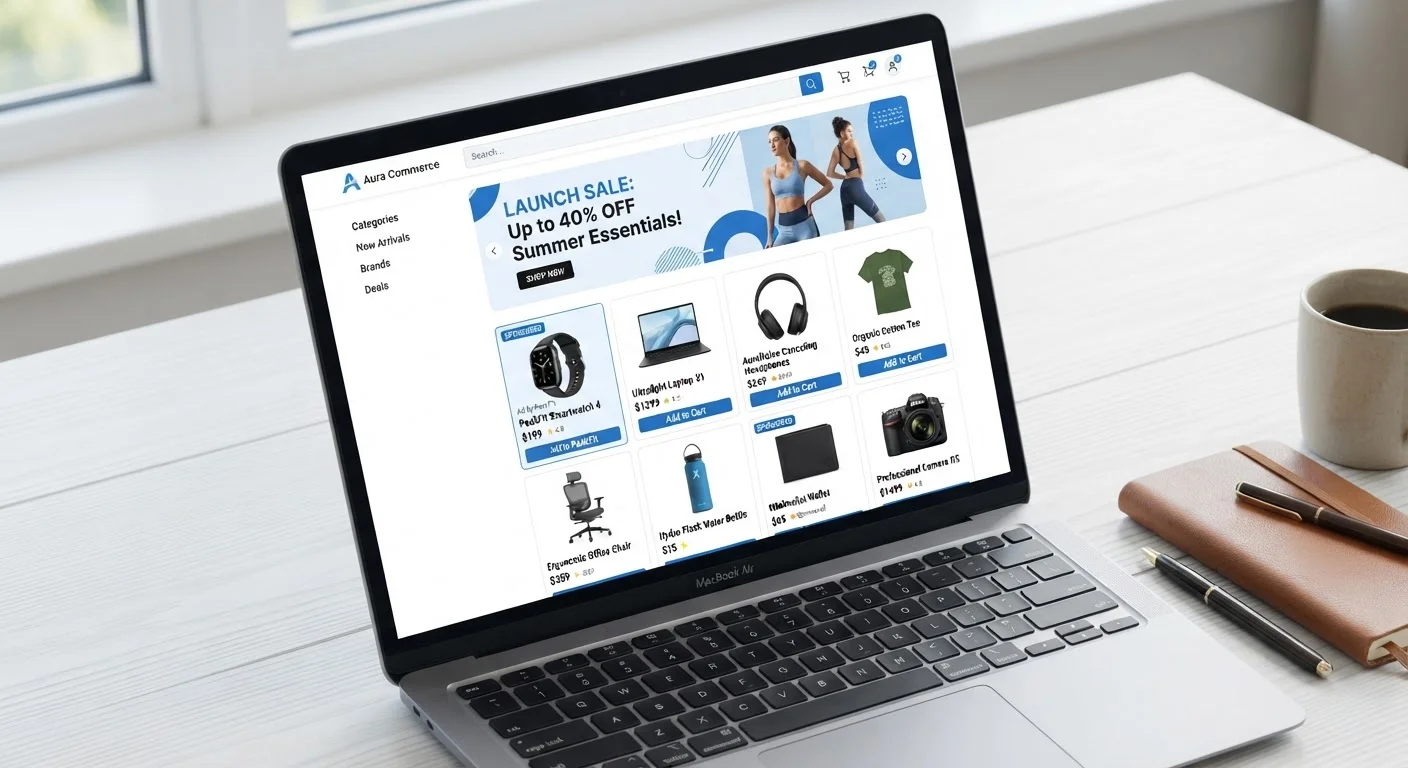
When a shopper searches for a product on a major e-commerce platform, the results they see aren't purely organic. Some listings are paid placements - brands that have purchased visibility within that search environment. This is retail media in its most familiar form, though the channel extends well beyond sponsored search results.
Retailers with large digital audiences have built advertising infrastructure on top of their e-commerce platforms, creating what are now called retail media networks. These networks give brands a mechanism to bid for placement in search results, category pages, homepage banners, and increasingly, off-site inventory such as display advertising on external websites or streaming platforms - all powered by the retailer's own first-party shopper data.
What distinguishes retail media from other digital advertising channels is the data foundation. Because the retailer controls the transaction layer, its targeting capabilities are built on actual purchase behavior: what shoppers buy, how often, at what price point, and in what category combinations. This gives retail media a targeting signal that platforms relying on browsing behavior or social graph data cannot replicate.
See the full advertising channel landscape for context on how retail media fits within a broader channel strategy.
$54B+
US retail media ad spend projected annually
According to eMarketer estimates, US retail media network advertising has grown into one of the fastest-expanding digital ad categories by annual spend.
~15%
Share of US digital ad spend attributed to retail media
Industry analysts estimate retail media now accounts for a meaningful and growing share of total US digital advertising expenditure, driven by first-party data advantages.
3-5x
Higher purchase intent vs. general display
Shoppers on retail platforms are actively browsing product categories, which research firms consistently cite as a significant intent advantage over off-site display environments.
The Core Ad Formats and Placement Types
Retail media networks typically offer three tiers of inventory, each with different visibility characteristics and cost structures.
- Sponsored product listings: Paid placements that appear within a retailer's native search results or category browse pages. These look similar to organic listings but are labeled as sponsored. They are performance-driven and typically sold on a cost-per-click basis.
- Sponsored brand or display placements: Banner and branded content units that appear on higher-traffic pages - homepages, category landing pages, or deal hubs. These carry more brand-building utility but also higher cost floors.
- Off-site retail media: An expanding segment where the retailer's audience data is used to target ads across external platforms - programmatic display networks, connected TV, or streaming audio - and attribute resulting purchases back to the retailer's own data.
This off-site expansion is significant because it moves retail media beyond the retailer's owned properties entirely, competing more directly with channels like connected TV and streaming audio advertising while retaining the purchase-data targeting advantage.
Start With Sponsored Search Before Scaling to Display
For brands new to retail media, sponsored product listings typically offer the most measurable return at the lowest entry cost. Because they are tied directly to shopper search intent and charged on a cost-per-click basis, they are easier to optimize than display placements. Establish a baseline ROAS benchmark on sponsored listings before committing significant budget to higher-funnel retail media formats.
Which Businesses Benefit Most - and Where the Limits Are
Retail media is most naturally suited to brands that sell physical products through retailers with established media networks. Consumer packaged goods - food, beverage, household products, personal care - represent the heaviest category of spend, partly because these brands already operate on thin margins and depend on in-store and digital shelf visibility to drive volume. Consumer electronics, apparel, and home goods brands follow a similar logic.
The channel is structurally less accessible for service businesses, B2B companies, and brands that distribute primarily through their own direct-to-consumer channels with no retail partner relationship. If there is no product on the retailer's digital shelf, there is no natural home for a sponsored listing.
Attribution clarity is one of retail media's strongest arguments for inclusion in a channel mix. Because ad exposure and purchase can occur within the same platform session, closed-loop reporting is more reliable here than in many other digital channels. That said, this closed loop only measures purchases made through that specific retailer - it does not capture conversions that happen elsewhere after a shopper sees the ad.
Brands running retail media alongside other paid channels should be careful not to over-attribute performance to retail media simply because its reporting looks clean. For a structured view of how channel-mix decisions interact, see common channel mix mistakes that erode ROI.
Budgeting and Strategic Fit
Retail media spend can range from a few hundred dollars per month on a self-serve platform to seven-figure managed commitments with major retail networks. The appropriate investment depends on the brand's distribution footprint, the category's competitive intensity on the platform, and the retailer's own minimum requirements.
One practical consideration: retail media ad budgets are separate from trade promotion budgets but often managed by different teams within the same organization - marketing versus sales or shopper marketing. Aligning these functions early avoids duplication and helps ensure that paid retail media is supporting rather than cannibalizing promotional periods.
Retail media works best as part of a coordinated channel strategy rather than in isolation. Brands using a multi-channel advertising approach can use retail media to capture demand at the point of purchase while investing in channels like social media advertising to generate awareness earlier in the funnel.
This article is for general informational and educational purposes only. It does not constitute personalized financial, advertising, or business advice. Budget and strategy decisions should be evaluated in the context of your organization's specific circumstances, ideally with guidance from a qualified marketing or financial professional.