

Key Takeaways
Last-Mile Delivery
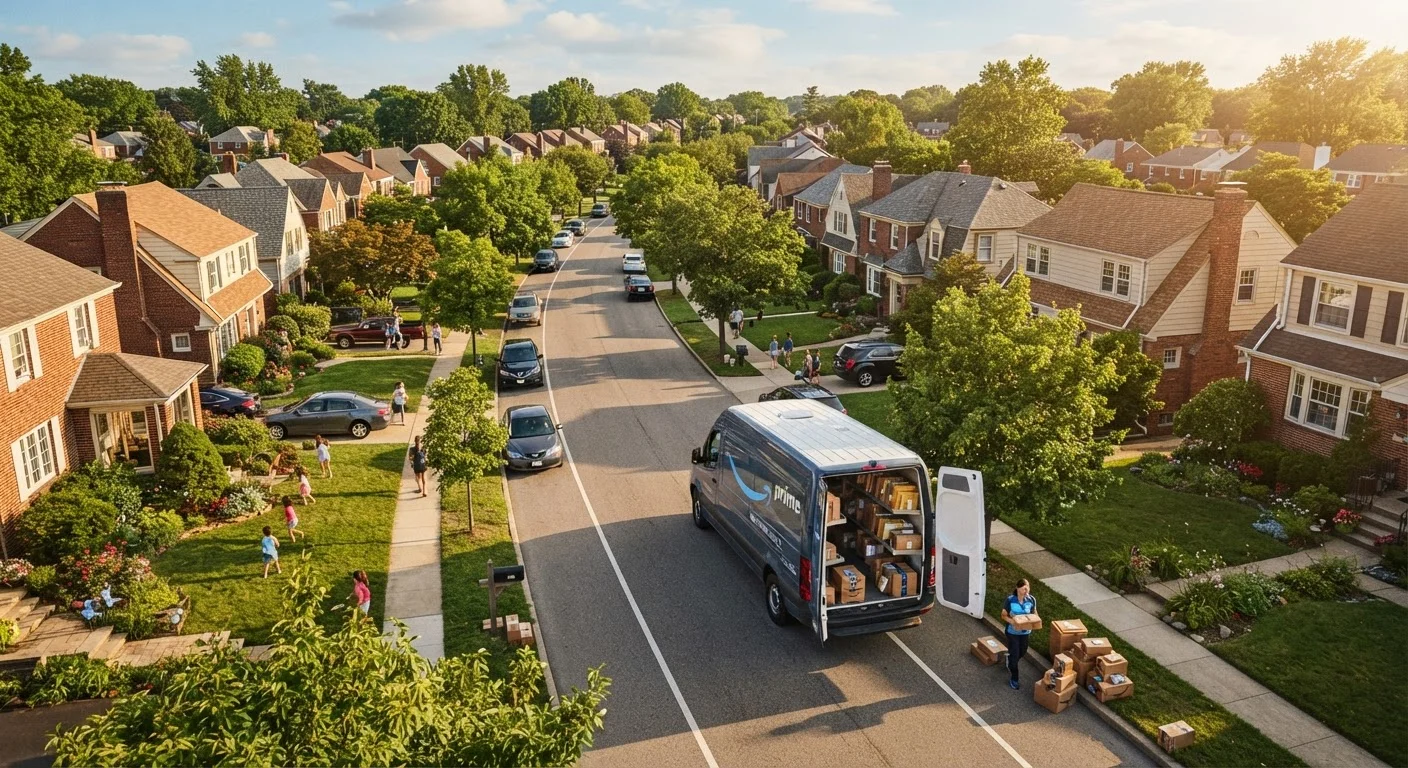
Last-mile delivery refers to the final step in a supply chain: the movement of goods from a local distribution point - such as a warehouse or fulfillment center - to the end customer's door. Despite covering the shortest physical distance, this leg is typically the most time-intensive and expensive segment of the entire shipping journey. It is also the stage customers experience most directly, making it central to brand perception and satisfaction.
In logistics, 'last mile' is a borrowed telecom term. It does not imply a literal single mile - last-mile routes can span dozens of miles depending on delivery density and geography.
What Makes Last-Mile Delivery Different
Most freight moves efficiently in bulk: full truckloads travel long distances, pallets move through sortation hubs, and containers cross oceans at predictable cost-per-unit rates. Last-mile delivery breaks that pattern entirely. Instead of consolidating freight, it disperses it - splitting shipments into individual packages destined for unique addresses, often with narrow delivery windows and unpredictable recipient availability.
This structural difference explains why last-mile is simultaneously the shortest and most expensive segment of the supply chain. A single driver might make 80-120 stops in a shift, spending more time on parking, package retrieval, and doorstep navigation than on actual driving. Urban density helps - more stops per mile - but introduces its own friction through traffic, parking restrictions, and building access challenges.
Last-mile is also where logistics becomes personal. The customer who tracked their order across three states only encounters the physical supply chain when a driver knocks on their door. That interaction - or failed attempt - shapes how they perceive the retailer, not the carrier.
Urban vs. Rural Last-Mile Economics Differ Significantly
Businesses operating across mixed geographies should analyze last-mile performance by region rather than in aggregate. A blended average can mask high per-unit costs in rural zones that are subsidizing more efficient urban routes. Separate benchmarking by geography allows more targeted decisions about carrier mix, delivery frequency, and pricing strategy.
The Core Cost Drivers
Understanding what makes last-mile expensive helps businesses identify where operational changes have the most impact. The primary cost drivers are:
- Low delivery density: Rural and low-density suburban routes require more miles per stop, raising fuel and labor costs sharply. Urban routes are more efficient per package but harder to execute due to traffic.
- Failed first attempts: If a recipient is unavailable, the package must be redelivered - effectively doubling the cost. Redelivery rates in residential e-commerce can run 5-15% or higher depending on the sector.
- Labor intensity: Last-mile is difficult to automate at scale. Even with route optimization software, drivers are still making judgment calls at every stop. Labor represents a large and growing share of last-mile operating costs.
- Returns handling: Reverse logistics - collecting returned packages - often runs through the same last-mile network, adding complexity and cost that is easy to underestimate.
40-53%
Share of total logistics costs from last-mile delivery
Widely cited industry analysis consistently places last-mile costs at this range as a proportion of end-to-end supply chain spending in e-commerce.
5-15%
Typical failed first-attempt delivery rate in residential e-commerce
Failed attempts force costly redeliveries; the exact rate varies by sector, geography, and recipient communication practices.
For businesses evaluating how fulfillment infrastructure affects these costs, distribution network design is a closely related lever - warehouse placement directly determines how far, and how expensively, packages must travel on that final leg.
How Businesses Manage Last-Mile Logistics
Most US businesses rely on a combination of approaches rather than a single last-mile strategy. Common options include:
- National parcel carriers: Services like the major US postal and private carriers provide broad geographic coverage and established infrastructure. They offer scale but less flexibility on timing and service customization.
- Regional couriers: Smaller regional players often offer faster or more flexible service within specific metro areas, sometimes at competitive rates for high-volume shippers.
- Crowdsourced delivery platforms: Gig-economy platforms have expanded last-mile capacity in dense urban markets, particularly for same-day delivery use cases.
- In-house delivery fleets: Some businesses - particularly those with high delivery density, specialized cargo, or strong service differentiation needs - operate their own vehicles and drivers.
Each model involves tradeoffs between cost, control, and scalability. In-house fulfillment versus third-party logistics frameworks apply directly here: owning the last-mile relationship gives brand control but requires capital and operational management that not every business can absorb.
Reduce Failed Deliveries With Better Communication
Providing customers with real-time tracking and narrow delivery windows is one of the most cost-effective interventions in last-mile operations. When recipients know when to expect a package, first-attempt success rates rise measurably - reducing redelivery costs without requiring changes to carrier contracts or route structures.
Delivery speed expectations also shape which model is viable. Same-day and next-day delivery require fundamentally different infrastructure - a business cannot simply promise faster delivery without rethinking where inventory is positioned and which partners can execute at that pace.
Last-Mile as a Strategic Business Decision
For most businesses, last-mile is not simply an operational line item - it is a strategic decision about how they compete. Customers have internalized fast, free, and frictionless delivery as a baseline expectation, and last-mile performance is the most direct expression of whether a business can meet that bar.
That does not mean every business needs to offer same-day delivery or build proprietary fleets. It means understanding the tradeoffs clearly: what delivery speed and reliability is sufficient for your customer base, what that capability actually costs, and whether your current logistics model is structured to deliver it efficiently.
Last-mile decisions connect to broader logistics strategy. How warehousing, transportation, and inventory management are structured upstream determines what is even possible at the final mile. Businesses that treat last-mile as an isolated cost center rather than an integrated system outcome often find that efficiency gains are limited without upstream changes.
For businesses evaluating whether to restructure their approach, logistics outsourcing offers one path - trading direct control for scalability and specialist expertise - while building a more structured logistics workflow from receiving to final delivery is often the foundation that makes any last-mile model more consistent and measurable.
This article is for general informational purposes only and does not constitute professional logistics, financial, or legal advice. Businesses should consult qualified professionals when making operational or financial decisions.