

Key Takeaways
Distribution Network Design
Distribution network design is the process of structuring how goods move from production or procurement sources through warehouses, transportation links, and fulfillment nodes to reach end customers. It encompasses decisions about facility placement, inventory positioning, transportation modes, and channel selection. A well-designed network balances speed, cost, and service reliability across the entire delivery chain.
In supply chain modeling, network design often involves optimization algorithms that minimize total landed cost - including facility, inventory carrying, and transport costs - subject to service-level constraints such as maximum transit times.
What Distribution Network Design Actually Covers
Distribution network design is one of the most consequential decisions a supply chain team makes, yet it often receives less attention than day-to-day operational firefighting. At its core, the discipline answers a deceptively simple question: how do we get the right goods to the right places as efficiently as possible?
The answer involves four interconnected decision areas: facility siting (where warehouses and distribution centers are located), inventory positioning (how much stock to hold and where), transport mode selection (which carriers and service levels connect each network link), and channel structure (the commercial relationships through which goods reach customers).
These decisions don't exist in isolation. A choice to add a fulfillment center on the East Coast, for example, shifts inventory allocation, changes carrier mix, and may alter how the company routes e-commerce orders. Understanding these interdependencies is what separates reactive logistics from strategic network management. For a broader look at how these elements fit into an overall operation, see how warehousing, transportation, and last-mile delivery work together.
Facility Siting: The Decision That Sets the Baseline
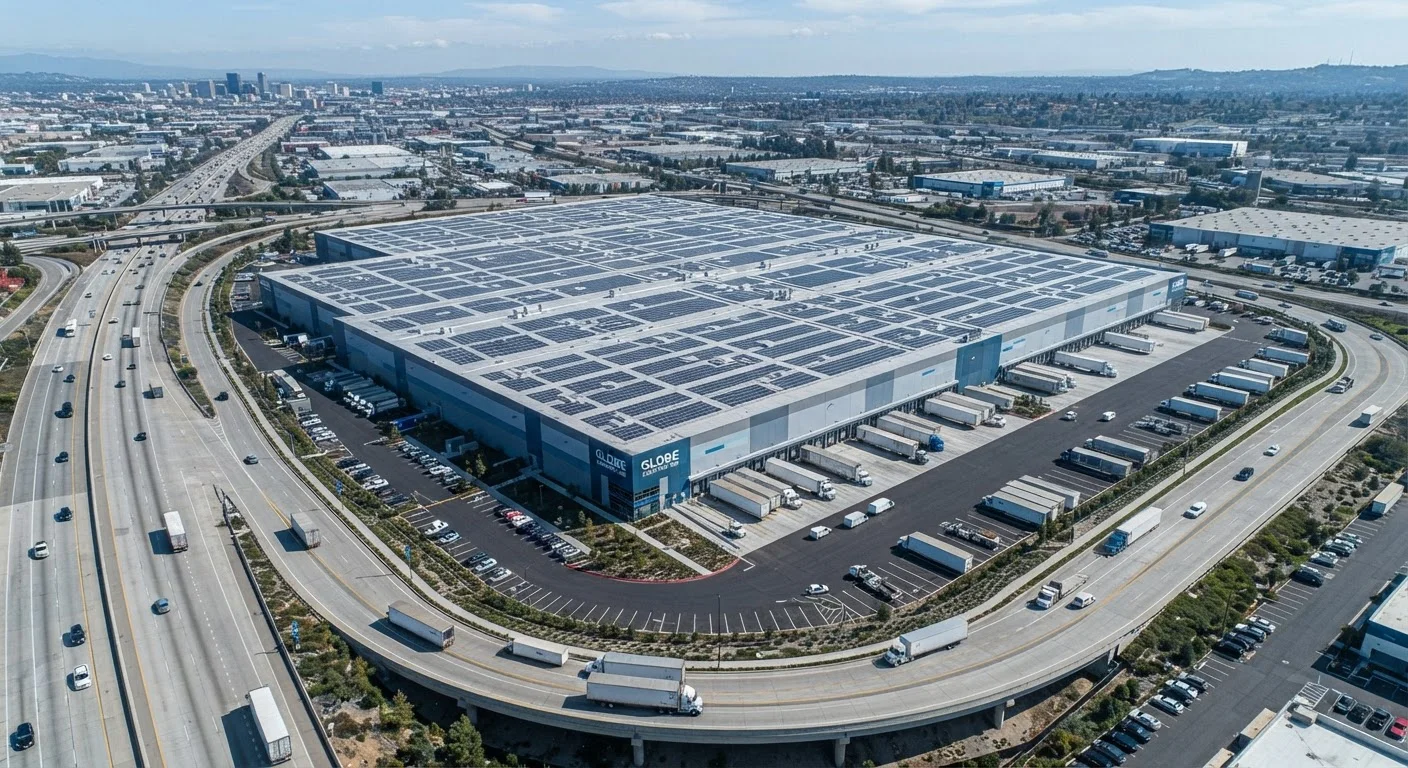
Where a business locates its warehouses and distribution centers establishes the physical boundaries of delivery speed and cost. Facilities close to high-density customer markets enable shorter transit times and lower last-mile costs. Facilities close to production or port entry points reduce inbound transport expense but push outbound distances higher.
The core trade-off is between fixed costs (leases, equipment, staffing) and variable transport costs. Adding facilities reduces the average distance goods must travel to customers, but each new site adds operating overhead. Most networks reach a point of diminishing returns where the transport savings from an additional facility no longer justify its fixed cost.
~70%
Of total logistics costs driven by transportation
Transportation typically represents the largest single cost category in a logistics operation, according to industry benchmarks from the Council of Supply Chain Management Professionals (CSCMP).
2-5 years
Typical network design review cycle
Supply chain practitioners commonly revisit distribution network design every two to five years, or following significant shifts in demand geography or sourcing strategy.
1.5x
Last-mile cost premium over linehaul on a per-unit basis
Industry analysis consistently shows last-mile delivery is disproportionately expensive relative to earlier network legs, reinforcing the importance of facility proximity to end customers.
Businesses also weigh labor availability, real estate costs, tax environment, and proximity to major highway and rail corridors. These factors vary significantly by region and can shift the economics of a site decision substantially. For practical guidance on how the internal layout of a facility affects picking and packing throughput, warehouse layout principles provide a useful framework.
Inventory Positioning and the Centralization Question
Once facility locations are determined, the next question is how inventory should be distributed across them. A centralized model consolidates stock in one or a few large hubs, enabling high fill rates and lower safety stock requirements through the statistical pooling of demand. A decentralized model spreads inventory across many locations to position stock closer to customers, reducing outbound transit time but increasing total inventory investment.
Neither model is universally superior. High-value, slow-moving products often benefit from centralization, where the cost of excess inventory is significant. Fast-moving consumer goods destined for dense urban markets frequently justify regional or local positioning to meet compressed delivery expectations.
The centralized versus decentralized inventory trade-offs are measurable and should be modeled against actual demand data before committing to a network configuration.
Model Before You Commit to a Network Structure
Distribution network decisions - particularly facility leases and equipment investments - create multi-year cost commitments. Before finalizing a configuration, run scenario models using actual demand data, realistic transport rates, and projected growth. Even simplified spreadsheet models can surface trade-offs that aren't obvious from intuition alone.
Transport Modes, Channels, and Last-Mile Reality
Transport mode selection governs cost and speed at every link in the network. Long-haul truckload and intermodal rail serve high-volume, time-tolerant lanes efficiently. Less-than-truckload (LTL) freight provides flexibility for smaller shipments at intermediate cost. Parcel carriers dominate last-mile delivery to consumers and small businesses. Air freight is reserved for urgent or high-value shipments where speed justifies the premium.
Channel structure - whether goods move directly to end customers, through wholesale intermediaries, or via retail partners - determines which transport links matter most. Direct-to-consumer models place the greatest pressure on last-mile performance; last-mile delivery costs and strategies deserve dedicated attention in any network design review.
Designing or redesigning a distribution network is a structured process. building a logistics workflow from receiving to final delivery offers a practical starting point for teams ready to document and optimize their end-to-end processes.
This article is for general informational purposes only and does not constitute professional supply chain, legal, financial, or operational advice. Businesses should consult qualified logistics and operations professionals before making significant network design decisions.